Hello everyone, after a month of hiatus, Tech Tuesdays on TFL is back to give you the latest and trendiest tech topics in the face of the internet. And this week, we’ll be talking about two of the hottest and most talked about smartphones today – the HTC One and the recently announced Samsung Galaxy S4.

Both phones aren’t officially available in the global market yet, but both the HTC One and the Galaxy S4 have been pitted against each other numerous time on various websites, blogs and of course in social networking sites. So this week, let’s take a closer look at these two super phones so that we’ll have an idea on what each handset provides to us consumers.
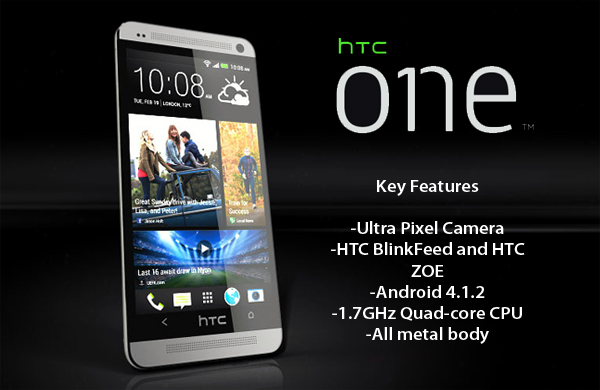


The HTC One is barely a month old since its launch last February and yet a lot of people are already considering it as one of the best smartphones released this year. And this is not that surprising as HTC has delivered a phone that is not only pleasing to look at but is also jam packed with features and software that leaves (most of)its competition in the dust.

In the display department, the One features a 4.7-inch Super LCD3 capacitive touchscreen with a screen resolution of 1080 x 1920 pixels and a pixel density of 469 pixels per inch. The screen is protected by Corning’s Gorilla Glass panel technology.


In terms of performance, the HTC One runs on Android 4.1.2 Jelly Bean and is powered by a Qualcomm APQ8064T Snapdragon 600 chipset with a 1.7GHz quad-core processor with Adreno 320 GPU. There’s 2GB of RAM and 32GB or 64GB worth of on-board storage.

However, the HTC One’s crowning glory comes from the camera department. In contrast with other manufacturers who try to outdo each other by putting a camera with the most pixel in their devices, HTC is trying to set their own bar by using a camera with “ultrapixels”. Basically the camera sensor in the device can gather 300 percent more light than most conventional cameras and yet retain the size of 4MP sensor.


A few other cool things to note about the HTC One are the numerous features that the company has incorporated into the handset by means of its HTC Sense 5. These include the HTC Blinkfeed, a news and social media aggregator that is shown on the phone’s home screen, HTC Zoe which makes use of the device’s camera to create a rich multimedia experience, and lastly HTC BoomSound that utilizes the two front-facing speakers to deliver true stereo audio for an immersive audio experience.


Another smartphone heavy weight to make its grand entrance this quarter is the Samsung Galaxy S4. The phone made its debut at the company’s “Unpacked” event in NYC last week. And although a lot of people were sort of disappointed with the lack of innovation in terms of design, Samsung still managed to get a hype out of the event and out of the phone.

For starters, the S4 packs some serious muscle power with its Exynos 5 Octa chipset that features two quad-core processors clocked at 1.6GHz and 1.2GHz respectively and a PowerVR SGX 544MP3 GPU. It also has 2GB of RAM and will come in 16GB, 32GB and 64GB variants. The display on the S4 is a 5-inch 1080p Super AMOLED capacitive touchscreen with Gorilla Glass 3 panel.

The Galaxy S4 has a 13-megapixel rear camera and a 2MP camera at the front, both of which are capable of capturing 1080p videos at 30 fps. And just like the HTC One, The Galaxy S4 features a number of nifty software and apps that maximizes the use of its hardware.


These include dual camera recording which allows the phone to use both front and rear cameras at the same time to record videos. There’s also a host of other camera functions such as Sound & Shoot that lets users record five seconds of audio before taking a shot and the Drama shot function which allows the phone to take more than 100 shots in four seconds so that the user can select the best captured images to composite in a single frame.

An eraser function (anti-photo bomb feature) is also present to acts similarly with the Drama shot but allows users to remove any unwanted elements in a photo. Furthermore, Samsung has tossed in a few other apps including a host of “S” apps such as Samsung’s health-oriented app – the S health.


Other notable features include the Group Play which allows users to use multiple phones as stereo speakers in sync, Samsung Home Sync and Smart Switch for seamless data transfer among other NFC enabled devices, Samsung Knox for BYOD (Bring You Own Device) users who want to compartmentalize their phone’s content into personal and work and of course the much talked about Smart Scroll and Smart Pause features that uses eye-tracking technology.

Both phones sport LTE Cat 3, and the usual mix of Superphone basics including Wi-Fi 802.11 a/ac/b/g/n, Bluetooth 4.0, accelerometer, gyro and proximity sensors, compass and HTML5 support to name a few.

So there you have it everyone. Which super phone do you think is the better – The HTC One or the Samsung Galaxy S4? Share with us your thoughts by leaving a comment below. You can also find us on Facebook, Twitter, Pintrest and Google Plus. And please, don’t forget to subscribe to our blog for more Filipino lifestyle stories. 


For mobile device gamers who are fans of the car racing game genre, French mobile game developer Gameloft and its Asphalt racing game series whose origin stretches back to the time of the feature phones has long offered an enjoyable line of racing games that provide quality gaming experience for a wide range of devices including iOS and Android.


Around 5 to 6 months ago, Gameloft updated its Asphalt mobile racing game series with the Asphalt 7: Heat. Just like its predecessors, the game follows the same (almost identical) gameplay with minor tweaks and revisions. But are the new additions to the game enough to make it a winner? I know it’s quite late but here’s my review of Asphalt 7 Heat for the iOS.

THE BASICS

Asphalt 7 features predominantly the same gameplay as Asphalt 6: Adrenaline. There are several gameplay categories you can compete in like DRIFT COMPETITION where the player is required to collect a specific amount of points by drifting, NORMAL RACE where users win by finishing in the top 3 for each race, ELIMINATION where users are required to race under an elimination process and the TIME TRIALS wherein users need to race before the timer runs out.


Game controls are also identical, with players having an option to change the accelerometer-based controls to touch-based controls. Controls for nitro or turbo are still present in Asphalt 7. The adrenaline mode, a legacy of Asphalt 6: Adrenaline, is also still found in the game. In terms of the tracks available for use, Asphalt 7 features relatively the same tracks with only a few additions and a few modifications to existing tracks.


Cars on the other hand are a different story. Yes, the number of cars that users can use for races have grown in number but they are now categorized into different categories. Bike lovers will also be disappointed as Gameloft has decided to remove all bikes and trikes in the game.


Lastly, power-ups such as nitro boosts and cash pick-ups are still present in Asphalt 7 and are placed in different locations in each race track.

THE GOOD

One of the best aspects of the game is its familiar gameplay. For those who have played any of the previous versions of the Asphalt racing games, Asphalt 7 would be a piece of cake when it comes to the controls and racing tracks. The game also showcases a more diverse car collection that players can choose from and just like the previous version; each car can be customized in terms of paint, decals, window tint (new), and performance parts such as suspension, handling and speed.


Another welcome addition to the game are “goals”. All throughout the game, three goals are set that gives bonus EXP to a player whenever he achieves any one or more of these goals. These extra tasks may range from buying an upgrade for your car, performing a specific set of skills in a race or joining a multiplayer game.


Gameloft also added the rent and preview feature in this edition of Asphalt. The rent feature allows you to pay a specific sum of money in order to use a locked car for a race. With these feature, players can use more powerful cars on specific races that they are having a hard time completing. On the other hand, free previews are work very much like renting but without the player spending money to use a higher level car. The only downside to these features is that users will only be able to play the stock version of a car without the possibility of tuning.

THE NOT SO GOOD

Asphalt 7 of course isn’t exempted from any shortcomings. For starters, the tiered categorization of the cars in the game (although one of its selling points) poses a small concern for games. This is because this arrangement makes it impossible to use powerful cars in a race even if you have already won them in the past especially if the event you're playing is at a lower tier.


It is also sometimes very difficult cars because they are either quite unresponsive especially on beginner cars but super responsive on the supercar level. This can take some adjustment time and it’s a bit harder when you take into account that users may have to switch between different car types.


Also, there are cases wherein a specific car cannot be purchased unless you finish a specific event. In fact, there are even models that you can only purchase once you finish all the racing events in the entire game. Having said this, one can easily deduce that in order for a user to drive all the cars in the game, a player must play the game again several times before unlocking ALL cars.

THE VERDICT

Asphalt 7 is your typical racing game from Gameloft. Its main selling point is the familiar interface and gameplay mixed with minor tweaks and additions in order to maintain its existing fan base and at the same time to hook users who are new to the franchise.

However, there are some changes in the game that can be considered quite a gamble for Gameloft as it can either make or break the game in terms of customer experience. Nevertheless, Asphalt 7 remains one of the best games of the racing franchise as it manages to maintain the flair and appeal of its predecessor but at time provide an enjoyable overall experience to mobile gamers.

And with a current price of $0.99 on Apple’s iTunes, I’m guessing Asphalt 7: Heat will be a very “hot” offer even for the most thrift consumer.

So there you have it guys. What are your thoughts about Asphalt 7: Heat? Tell us be leaving a comment below. Also, please do add us up on Facebook, Twitter, Pinterest and Google Plus. You may also subscribe to our RSS feeds for more Filipino lifestyle stories about technology, gadgets, fashion, food, travel and beauty.


About TFL

The Filipino Lifestyle is a team of young and hip professionals with a passion for sharing their insights on topics various about technology, gadgets, travel, food, beauty and fashion with the rest of the online world. The team’s unique mix of hobbies and interest allows The Filipino Lifestyle Blog to be a rich source of information for its readers that is both fun and interesting to read.

Like us on Facebook

2012-2015 © The Filipino Lifestyle
Planer theme
Powered by Jasper Roberts Consulting - Widget