The current age has brought about a new trend with it. This trend is called the “Selfie.” This six letter word defines the activity of taking your own photo with a camera. It can be with a group of friends or at a special occasion or even with your pet! Every person comes up with their own version.

Due to many advancements in technology along with this amazing new trend, many smartphone manufacturers have come up with newer versions of mobile phones that have the best camera quality present for those umpteen number of selfies that everyone takes. These selfie phones are being sold at a number of stores along with many marketplaces who are offering them at discounted prices such as Kaymu and Ebay etc.

The best Selfie Phones for the year:

Samsung Galaxy S7 (Unofficial)


Everyone is eagerly waiting for this phone to launch. With the new Android 6.0 operating system and Quad-core 4.0 GHz 64 bit processor, it will be a very stable phone. The back camera will be 16 MP with a 5.1 MP front camera with flash for all your selfie needs.

Microsoft Surface Phone (Rumoured)

Surface Phone Concept art

This phone has a 5.5in Quad-HD AMOLED display to view all your pictures in the most beautiful manner. It offers 21Mp rear and 8Mp front cameras to snap away those lovely selfies that you want to take. Moreover, it has a 64 to 128 GB storage space to keep all that you love.

HTC One M10 (Unofficial)

HTC One M10 Concept Art

This is the upcoming and highly coveted selfie phone as it offers a whopping 27 MP front and back camera auto face detection focus technology. When you buy this phone, not only will you have high resolution pictures, you won’t even have to work that hard for them.

LG G5 (Unofficial)

LG G5 Concept Art
This LG phone is one the most popular upcoming ones. It offers a 20 MP back camera and a 10 MP front facing camera for you to look classy and sophisticated in all your pictures. Along with that, it has a true IPS HD display for a beautiful picture quality.

Oppo Find 9 (Unofficial)

Oppo Find 9 has a large 5.5 inch Quad HD display that offers superior picture quality and beautiful colors for you to enjoy. When it comes to cameras, it has a 20 MP secondary camera and an 8 MP front camera for all your selfie needs.

Sony Xperia Z6 (Unofficial)

This phone will make you love yourself in all your selfies. In terms of cameras, it has a 27 MP rotator camera scanner that will take your selfies in all the angles that you will love. Moreover, the screen is of 5 inches with 4k display resolution.

iPhone 7 (Unofficial)

Everyone knows the picture quality that the iPhone has to offer. This phone will have a 12 MP back camera and a 5 MP front camera for you to look absolutely great in. For men and women alike, they will be overjoyed with this one.

HTC Desire Eye (Available)


This is the phone to get if you are a selfie fanatic. It has a 13 MP shooter at the front and the rear. Both of the cameras have their own dedicated flash for the best pictures possible. Along with that, the wide 22 mm lens gives a large angle to all your selfies.

Asus ZenFone (Available)


This phone has a 13 MP front facing camera that has an LED flash present with it. Moreover, it offers a wide 88 degree angle so that all the aspects of your selfie are taken in. It also has features such as panorama, slow motion, smart remove and time lapse present.

LG V10 (Available)


This phone has not one but two front facing cameras that you can use for all your selfies. The two front facing cameras are of 5 MP and the back camera is 13 MP. The cameras feature multi view and snap options with it.


About the Author: Sab

I cover Mobile, Internet, Good and Bad of Technologies. I’ve been a technology writer for the last three years. If you have any question and feel free to contact me on Gtalk – it’s a beautiful way to get contacted me directly.


With the holidays just looming around the corner, a lot of us are already looking for nice gifts to get for ourselves or for our loved ones. With technology playing a huge part in our lives these, tech products such as mobile phone and tablet accessories are an easy and convenient choice especially if you’re planning to do your shopping online.


For instance, American consumer electronics manufacturer Belkin has a wide selection of mobile device accessories that are offered on Lazada, making them readily accessible and easy to order in case you don’t have the time to go to malls to hunt for the products you want to purchase.

Here are our top picks from Belkin’s roster in Lazada, which we think you’ll really like as well:

5. Belkin Mixit 4 Feet 90 Degrees Lightning to USB cable

One of the most common complaints about Apple products is that their cables are not that built well. In fact, the cable has a rating of just 1.5 stars on the Apple store and there are a bunch of discussions regarding the product (mostly complaints) on the company’s website.


The usual issue with Apple’s own cable is that it can easily break near the connectors causing the wires to fray. The Belkin Mixit cable avoids this dilemma by using a 90-degree angle for the lightning connector, protecting the tip and lessening the stress on the cable.

The cable is also four times longer than the standard lightning to USB cable and yet it offers the same fast charging and data transfer rates as the one made by Apple and comes in 7 different colors. Belkin is also offering a 2-year limited warranty for this cable ensuring that you’ll be able to use it for a long time.

Price: Php 1,190 (Get it here)

4. Belkin Micro USB Cable with Lightning Connector adapter

Another nifty accessory you might want to consider is the Micro USB cable with lightning connector. The product extends the functionality of the Mixit cable but adds a micro USB cable adaptor so you can charge other devices.


The cable is perfect as a travel companion as it eliminates the need to bring multiple cables to charge different devices. The adapter is connected to the cable via a durable yet flexible rubber strip so you don’t have to worry of losing it when it’s not in use.

Just like the Mixit version, this cable is also 4ft long, comes in a slew of colors and if offered with 2 years limited warranty.

Price: Php 1,490 (Get it here)

3. Belkin Family RockStar 4-port USB Charger

Another handy accessory for people who own multiple devices is the Belkin Family RockStar 4-port USB charger. The device features four USB ports that delivers a total of 5.4 Amp of power allowing users to charge multiple devices at the same time.


The charger also comes with an intelligent smart chip that regulates the flow of electricity to each port depending on how many devices are being charged. The charger is also wall-mountable and sports a 10-foot cable for convenient placement.

Price: Php 3,290 (Get it here)

2. Belkin Stylus for Tablets

For those looking to do some productive work during the holidays or those who delve in the field of arts and design, a great gift idea would be this Belkin Stylus for tablets.


The stylus features a rubber tip that glides smoothly over any tablet screen allowing users to easily jot down notes or sketch illustrations. The stylus looks very much like a standard pen and even comes with a clip so you can attach it easily and securely to a folio.

Price: Php 325 (discounted by 50% - Get it here)

1. Belkin QODE Thin Type Keyboard case for iPad Air

If you’re looking to do more work on your iPad, the Belkin QODE Thin Type keyboard case for the iPad Air is the perfect product for you.


Despite its slim 4mm profile, the keyboard case’s aluminum construction gives a feeling of durability and strength to the user. The case features well-spaced TruType keys that are designed for accurate typing as well as tactile response thanks to the spring mechanism placed underneath each key.

The Thin Type cover uses Bluetooth technology to connect to the iPad and uses Smart Sensing technology that automatically turns the keyboard on or off when the tablet is placed on the slot. The keyboard also boasts function-specific keys that provides shortcuts for different functions.

Price: Php 4,990 (Get it here)


This holidays, give yourself or your loved ones, one of the most awesome gift they can get with these great finds from Belkin. You can get all these stuff by ordering online from Lazada. 


You can also create your own wish list on Lazada and ask your friends and family to give these items (or other products from Belkin) to you as a gift this Christmas.


Philippine-based mobile phone manufacturer Torque recently launched a duo of affordable Android smartphones that were designed to provide Filipino smartphone users a balance between performance and price.


Torque’s Droidz Force and Sport are both Android-based phones that utilize the company’s Flex technology which is basically a technology that optimizes the software of the phone to maximize the hardware capability of the device. This means that these phones are able to provide faster performance compared to similarly spec’d handsets.

Between the two, the Droidz Sports is the one meant for the truly budget conscious consumer. The phone sports a 3.5-inch HVGA display with a resolution of 320 x 480 pixels. It also has a 1GHz single-core Spreadtrum SC6820 processor which is complemented by 256MB of RAM, Mali 400 GPU and 512 of internal memory.

The phone also has a microSD card slot that can accommodate up to a 32GB card. In terms of multimedia, the Droidz Sports offers consumers with a 2MP fixed-focus camera at the back, a 1500mAh battery, FM radio, multimedia player, micro-USB port and a 3.5mm headphone jack. Connectivity wise, the Droidz Sports features Wi-Fi, Bluetooth and support for EDGE/GPRS/SMS/MMS.

The Droidz Force on the other hand are for those who prefer a bit more power on their device. The packs a 4.0-inch HVGA screen with a resolution of 800 x 480 pixels with a pixel density of 233 pixels per inch. The Droidz Force is powered by the same 1GHz Spreadtrum processor and 512MB on-board storage as in the Droidz Sport but has a beefed up 512MB of RAM.

The handset is also fitted with a Mali-400 GPU, a FM radio, multimedia player, 2MP front-facing fixed-focus camera at the back, a VGA front camera, Micro-SD card slot that supports up to 32GB cards, Wi-Fi, Bluetooth and a 1500mAh Li-Ion battery.

Both devices run on Android 2.3.6 Gingerbread and are priced at P2599 (for the Droidz Sport) and P2999 (for the Droidz Force).


Chatwing chat widget is now one of the leading chat apps online. Most users find it easy to use and effective in providing global connectivity. Another positive feedback about this dynamic chat box is the wide array of modification options giving users the opportunity to experiment with the widget’s appearance. The customization leeway and communication leverage Chatwing offers brings online advantages useful to business endeavors.


In customization, users can be as creative as they want. They have many tools available in changing every aspect of the chat box. They only have to decide whether they want the chat tool to blend it effectively in their websites or make it unique to attract attention.

Users can set the main color of the chat app, message area background, the message body background and input text. Experimenting with colors and font styles can be really fun since you have a lot to choose from. Combine colors that will result to the kind of mood you want to induce during interactions. The power of colors can not be underestimated.


The size, style and color of the font are also factors to be considered because it can affect conversations. Combinations will either make the chat activity convenient or difficult to web visitors.


If you are not satisfied with plain colors as the website chat tool’s theme, you need not get frustrated available background images are available, too. Funky, girly and formal designs are offered by Chatwing.

 This is how creative you can get with Chatwing’s high customization level! You can also upload photos of your own choice to become the background image. What’s more interesting is that you can upload MP3 links to play in the background while you are all engaged on the topic being discussed. Talk about giving your web visitors a unique and sensible chatting experience!


You can choose the language of the chatbox, too. Rename the chat app and give it an interesting title. You can also set disconnection time of the users from the chatbox, you are in control.


Aside from customization, users can also manage the chat box interactions. You are allowed to assign moderators to help you with facilitating discussions and monitoring. To lessen the tasks, activate the filters that will delete out offensive words automatically or ban obnoxious chatters real-time.

When these features are used systematically and purposefully, it will directly benefit your website because it will engage more web surfers and help in maintaining the blog’s integrity. Chatwing chat widget is truly one of the highly flexible and reliable shoutboxes online today because of its useful options and advance modification choices.

Visit Chatwing here.

Aaron Kong is an active web developer and technology enthusiast who believes in the power of open and free communication. An avid developer who enjoys playing with new gadgets and testing open source software. Find Chatwing online http://chatwing.com


Talks about a Facebook phone has been in the rumor mills for quite some time now. Today, Facebook has finally ended all the speculations by announcing the long awaited Facebook phone (well, sort of) at an event on its headquarters in California.


However, the Facebook phone that was unveiled in the event wasn’t exactly the phone that everyone was expecting. Why? Because unlike what the rumors suggested, the phone that was presented to the world today wasn’t built by Facebook. The phone is made by HTC and runs a heavily customized version of Android – the “Facebook Home”.

Moreover, contrary to previous reports, Facebook Home is not just a home replacement app but rather a collection of apps that modify a huge part of the Android UI that will supposedly enable users to focus on their friends rather than on apps. Through the app, Facebook plans to bring in more content to users and put social networking at the front and at the center of the mobile phone experience. And this ideology is most evident in the two core apps that comprise Facebook Home – Coverfeed and Chat Heads.


Coverfeed is basically a glorified version of your Facebook newsfeed presented in edge-to-edge photos in the phone’s home screen. It displays images and status updates from a user’s friends. A user can swipe left and right to view other updates from his/her friends, double-tap on the home screen to like the update or view comments and likes by tapping the area located at the bottom of the home screen.

Chat Heads on the other hand is an improved version of the Facebook Messenger app that sits above the entire UI of the phone, allowing users to gain access to the phone’s messaging app anywhere in the phone. Users have the option to move 1 or a group of chat heads across the different edges of the screen and will remain visible as long as the users wants to interact with it.

Navigation on the Facebook Home has also drastically changed. The common back and navigation buttons are gone and are replaced by gesture-based commands carried out by a “bobble” which is the circular icon that contains the phone owner’s photo (or profile picture) located at the bottom of the screen. Users can swipe up from the bobble which will launch the app drawer.


The app drawer is divided into two segments. Once a user swipe’s up from the bobble, the favorites app drawer is first shown. Obviously this is where the user’s most used and favorite apps are located. The favorites app drawer also has three tabs at the top that lets users instantly upload photos to Facebook, post a status update or location. Swiping to the left of the favorites app drawer will direct the user to the main app drawer that holds all the apps currently installed on the phone.

Swiping the bobble to the left will launch the Facebook messaging app while swiping the bobble to the right will allow users to go back to the last app that they’ve opened.

Facebook Home will initially be released on April 12 on several handsets including the HTC One, HTC One X+, Samsung Galaxy SIII, Samsung Galaxy S4, Samsung Galaxy Note II and of course the HTC First (exclusive to AT&T). Facebook has also promised to bring monthly updates and improvement to the app as well as add support for additional phone models and manufacturers including Lenovo, ZTE, Huawei and Sony.

Now it would be interesting how Google would react in the future with Facebook Home especially if Mark Zuckerberg’s dream of putting the app in every smartphone would come true. This is because unlike other home replacement apps or custom ROMs, Facebook Home can have the ability to literally take over and change a phone and make Android OS lose its identity in the process.

What about you guys? What do you think? Is Facebook invading Android? And how do you think Google would react to this strategy? Share with us your thoughts by leaving a comment below. For other Filipino Lifestyle stories, do subscribe to our blog or add us up on Facebook, Twitter                , Pinterest or Google Plus.


Google is reportedly planning to release the second generation of its 7-inch tablet – the Google Nexus 7 by July of this year according to reports from Reuters.

The Nexus 7 which was Google’s first entry to the now highly competitive tablet market has received mostly positive feedback from consumers thanks to its very capable Nvidia Tegra 3 chipset that packs a 1.2GHz quad-core Cortex A9 processor and ULP GeForce GPU. However, its most striking feature is its price.

The Nexus 7 was the result of the collaboration between Google and Asus. And unlike other Android tablets from Asus, Google’s influence on the Nexus 7 was not isolated on the software used by the tablet but rather the competitive pricing of the device.

Google was one of the few manufacturers who dared to challenge Apple’s iPad not only in terms of hardware specifications and software but also in the pricing category. With its $199 initial price it’s almost half the cost of an iPad mini of the same capacity and specs. So it’s very interesting how Google will follow this act.


For starters, reports suggest that the new Nexus 7 will ditch the Nvidia chipset in favor of a Qualcomm Snapdragon. Furthermore, the new tablet may also have a higher resolution display and a smaller bezel compared to its predecessor. And of course, in true Google fashion, the release of this new tablet may also coincide with a new Android version - Key Lime Pie.

In terms of pricing Reuters say the Google might choose to sell the new Nexus 7 for $199 at the same time giving a discount to the old model; or they might sell the tablet for around $149 which will effectively kick the old model out of the market. The next generation Nexus 7 is rumored for launch on July 2013.

Any thoughts about this rumor? Share them with us by leaving a comment below. For other Filipino lifestyle stories, subscribe to our blog or follow us on Twitter, Pinterest, Facebook or Google Plus.


Source  


Hello everyone, it’s another Tuesday and it’s time again to get ourselves updated with the latest news in the tech industry. And this week, the biggest news is about rumored phones; from the long awaited to the surprisingly fast to emerge.


Let’s start off with the Facebook phone. Last week the social networking giant sent out invites to press with a teaser saying that the company will have a new “Home” on Android. And today a developer build of the alleged Facebook phone was leaked on the internet. According to reports, the Facebook Phone will run on a device built by HTC (codenamed HTC Myst) and will sport a modified version of Android 4.1.2, a 4.3-inch screen, Sense version 4.5, a 5MP rear camera, a dual-core processor and at least 1GB of RAM.

The new phone will also come with a Facebook-oriented home launcher which will let users see Facebook news feeds and updates right on the home screen. There will also be a more standard clock screen, shortcuts for launching apps and search via Google. The home replacement app will also have a feature called Chat Heads that will allow users to use Facebook’s chat functionality anywhere in the device.


Rumors are also suggesting that Facebook may offer a toned-down version of the “Home” app to other OEM who run either the stock Android UI or on top of a skin such as Samsung’s TouchWiz UI.

Next on the list is the long rumored Amazon smartphone. Rumors about the development of the device were fanned again after the Ex-Microsoft Executive Charlie Kindel announced that he’ll be joining Amazon to work on a “secret” project. According to a post on his Google Plus account, he’ll be building a team in Amazon that involves a project that the company has little experience with.


Furthermore, a post on Kindel’s LinkedIn page reveals that the team he’s supposed to build will be compromised of developers, program managers and product managers. Charlie Kindel’s previous work in Microsoft involved the development of servers and the Windows 7 application platform so it doesn’t take a genius to establish a connection between Kindel and Amazon’s possible plan of developing its own smartphone that may complement the Kindle Fire tablet in the future.

Last on the list is Samsung with its Galaxy S4 Mini. According to reports, the S4 mini might debut within the week. The S4 mini is reportedly scheduled to be released by late May or early June. Earlier reports say that the phone might come in several variants.

These include a single-SIM, dual-SIM, LTE and a Chinese version with TD-SCDMA. The S4 mini may also have two variants when it comes to the processor. According to reports, the dual-SIM version of the phone may have a 1.6GHz dual-core processor while the single-SIM version will reportedly have a quad-core processor.


All version of the S4 mini will have an 8MP camera at the back, 1GB of RAM, a 4.3-inch display and will run on Android 4.2.2 Jelly Bean.

And that concludes this week’s edition of Tech Tuesdays on TFL. Which phone are you most excited about? Do tell us by leaving a comment below. You can also add on Facebook, Twitter, Pinterest and Google Plus. And please don’t forget to subscribe to our blog for other tech news and other stories about Filipino lifestyle.


Lenovo might not be as popular a brand compared to industry heavy weights such as Samsung, LG or Sony but the company is slowly making a name for itself thanks to its affordable yet capable handsets that offer dual-SIM capability with Android’s open source operating system.


And this year, Lenovo Mobile Philippines has added four more handsets to its line of Android-powered smartphones. Two of which comes equipped with Android 4.1.2 Jelly Bean. And all four devices sport 4+ inch screens and target the mid-range to upper tier consumer groups.

LENOVO P770 – The P770 is the successor of Lenovo’s P700 and P700i smartphones that offered performance at an affordable price. And as such, the phone shares the same design aesthetics as its predecessors albeit the slightly bigger screen. The 4.5-inch screen of the device has a resolution of 540x960 pixels with a pixel density of 245 ppi.

Software-wise, the P770 improves in terms of the processor, the memory and of course the operating system. For starters, the P770 now comes with a 1.2GHz dual-core processor in contrast to the 1GHz found on its predecessor. It also has 1GB of RAM and runs on Android Jelly Bean.


Lenovo has also added a few apps they made themselves including Lenovo Power Saving and Lenovo Note. The phone’s UI is also integrated with Facebook, Skype, AccuWeather and TouchPal keyboard. And last but definitely not the least; 5GB cloud storage is also included with the device courtesy of SugarSync.

There’s 4GB worth of on-board storage, a 5MP rear camera, a VGA camera upfront and a 3500mAh battery. As with other droids these days, the P770 comes with the usual set of connectivity features and sensors including Bluetooth, Wi-Fi 802.11 a/b/g/n, an accelerometer, GPS and a compass.

LENOVO S890 – another new Jelly Bean-powered handset from Lenovo is the S890. It’s part of the company’s S-series smartphone and comes equipped with a 1.2GHz dual-core processor complemented by 1GB of RAM and a PowerVR SGX531 GPU. There’s 4GB of on-board storage with support for microSD card expansion of up to 32GB.


An 8MP snapper is placed at the back of the device while a VGA camera sits in front of the device for self-portraits and video calls. The rear camera features a LED flash, autofocus, geo-tagging, touch focus and even face detection. The rear camera is also capable of recording 720p videos.

The 5-inch display of the S890 has a resolution of 540x960 pixels with a pixel density of 220 ppi. And again, just like other smartphones today, the phone packs Bluetooth and Wi-Fi connectivity, accelerometer, proximity sensor, GPS and a FM radio. Lastly, there’s a 2250mAh battery to power the device.

LENOVO S720 – another handset for the Lenovo’s S-series is the S720. Geared towards stylish consumers, the company is branding this particular phone as Big Chic. The Big part is attributed to the phone’s 4.5-inch qHD display with a resolution of 540x960 pixels with a pixel density of 245 ppi.

The S720 comes has a MTK 6577 chipset with a 1GHz dual-core Cortex A9 processor which is complemented by a PowerVR SGX531 GPU, 512MB of RAM and 4G of storage space. It also features an 8MP camera at the back which sports a LED flash, autofocus, geo-tagging, touch focus and face detection. There’s also a 1MP front-facing camera for video conferencing and self-portraits.


The phone will be powered by a 2000mAh battery and will run Android 4.0.4 (Ice cream sandwich). The S720 will come in two Chic colours – either in white or in hot pink.

LENOVO A800 – Last but definitely not the least is the Lenovo A800. The A800 is Lenovo’s newest device that targets the entry level market. It comes equipped with a 4.5-inch screen with a resolution of 480x854 pixels with a pixel density of around 218 ppi.

The phone runs on Android 4.0.4 (Ice cream sandwich). It has 512MB of RAM and on-board storage worth 4GB with support for microSD expansion. The A800 has a MTK 6577T chipset with a 1.2GHz Cortex-A9 processor and the same type of GPU found in the S720.


A 5MP snapper is placed on the back of the phone which features auto-focus, geo-tagging and touch focus. There’s an accelerometer, proximity sensor, FM radio and GPS. Of course there’s also Bluetooth, Wi-Fi and a microUSB port.

So there you have it. Which Lenovo smartphone do you find most interesting? Share with us your thoughts by leaving a comment below. You can also find us on Facebook, Twitter, Pinterest and Google Plus or subscribe to our blog for other tech stories from around the globe.


Hello everyone, after a month of hiatus, Tech Tuesdays on TFL is back to give you the latest and trendiest tech topics in the face of the internet. And this week, we’ll be talking about two of the hottest and most talked about smartphones today – the HTC One and the recently announced Samsung Galaxy S4.

Both phones aren’t officially available in the global market yet, but both the HTC One and the Galaxy S4 have been pitted against each other numerous time on various websites, blogs and of course in social networking sites. So this week, let’s take a closer look at these two super phones so that we’ll have an idea on what each handset provides to us consumers.


The HTC One is barely a month old since its launch last February and yet a lot of people are already considering it as one of the best smartphones released this year. And this is not that surprising as HTC has delivered a phone that is not only pleasing to look at but is also jam packed with features and software that leaves (most of)its competition in the dust.

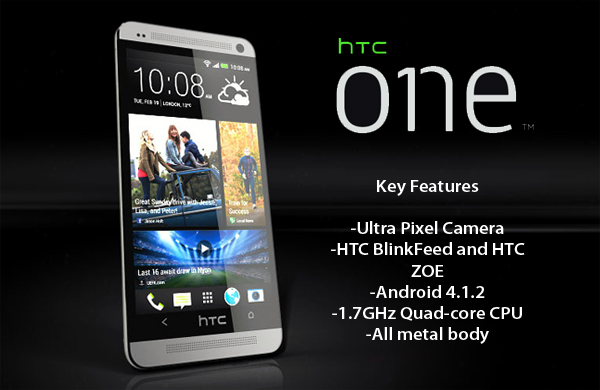
In the display department, the One features a 4.7-inch Super LCD3 capacitive touchscreen with a screen resolution of 1080 x 1920 pixels and a pixel density of 469 pixels per inch. The screen is protected by Corning’s Gorilla Glass panel technology.


In terms of performance, the HTC One runs on Android 4.1.2 Jelly Bean and is powered by a Qualcomm APQ8064T Snapdragon 600 chipset with a 1.7GHz quad-core processor with Adreno 320 GPU. There’s 2GB of RAM and 32GB or 64GB worth of on-board storage.

However, the HTC One’s crowning glory comes from the camera department. In contrast with other manufacturers who try to outdo each other by putting a camera with the most pixel in their devices, HTC is trying to set their own bar by using a camera with “ultrapixels”. Basically the camera sensor in the device can gather 300 percent more light than most conventional cameras and yet retain the size of 4MP sensor.


A few other cool things to note about the HTC One are the numerous features that the company has incorporated into the handset by means of its HTC Sense 5. These include the HTC Blinkfeed, a news and social media aggregator that is shown on the phone’s home screen, HTC Zoe which makes use of the device’s camera to create a rich multimedia experience, and lastly HTC BoomSound that utilizes the two front-facing speakers to deliver true stereo audio for an immersive audio experience.


Another smartphone heavy weight to make its grand entrance this quarter is the Samsung Galaxy S4. The phone made its debut at the company’s “Unpacked” event in NYC last week. And although a lot of people were sort of disappointed with the lack of innovation in terms of design, Samsung still managed to get a hype out of the event and out of the phone.

For starters, the S4 packs some serious muscle power with its Exynos 5 Octa chipset that features two quad-core processors clocked at 1.6GHz and 1.2GHz respectively and a PowerVR SGX 544MP3 GPU. It also has 2GB of RAM and will come in 16GB, 32GB and 64GB variants. The display on the S4 is a 5-inch 1080p Super AMOLED capacitive touchscreen with Gorilla Glass 3 panel.

The Galaxy S4 has a 13-megapixel rear camera and a 2MP camera at the front, both of which are capable of capturing 1080p videos at 30 fps. And just like the HTC One, The Galaxy S4 features a number of nifty software and apps that maximizes the use of its hardware.


These include dual camera recording which allows the phone to use both front and rear cameras at the same time to record videos. There’s also a host of other camera functions such as Sound & Shoot that lets users record five seconds of audio before taking a shot and the Drama shot function which allows the phone to take more than 100 shots in four seconds so that the user can select the best captured images to composite in a single frame.

An eraser function (anti-photo bomb feature) is also present to acts similarly with the Drama shot but allows users to remove any unwanted elements in a photo. Furthermore, Samsung has tossed in a few other apps including a host of “S” apps such as Samsung’s health-oriented app – the S health.


Other notable features include the Group Play which allows users to use multiple phones as stereo speakers in sync, Samsung Home Sync and Smart Switch for seamless data transfer among other NFC enabled devices, Samsung Knox for BYOD (Bring You Own Device) users who want to compartmentalize their phone’s content into personal and work and of course the much talked about Smart Scroll and Smart Pause features that uses eye-tracking technology.

Both phones sport LTE Cat 3, and the usual mix of Superphone basics including Wi-Fi 802.11 a/ac/b/g/n, Bluetooth 4.0, accelerometer, gyro and proximity sensors, compass and HTML5 support to name a few.

So there you have it everyone. Which super phone do you think is the better – The HTC One or the Samsung Galaxy S4? Share with us your thoughts by leaving a comment below. You can also find us on Facebook, Twitter, Pintrest and Google Plus. And please, don’t forget to subscribe to our blog for more Filipino lifestyle stories. 


Ubuntu, the linux-based operating system previously used in running servers and other infrastructure in many corporate IT departments will soon join the highly competitive smartphone arena come October 2013 says Canonical CEO Mark Shuttleworth earlier today in an interview with Wall Street Journal.

The operating system was first seen last month at the 2013 International CES running on a Samsung Galaxy Nexus phone. In terms of UI design, the OS makes heavy use of gestures for navigation and puts heavy emphasis on HTML5 web apps. The operating system shares an uncanny resemblance to Android as most of its component are based on it. However, Ubuntu has added several useful features at the same time removed or modified components to improve customer experience.


An additional feature of the OS that most businesses would definitely appreciate is its ability to provide access to all manners of data from different servers making it highly convenient to access corporate information through a single pocket-sized device. A practical example of this innovation is the ability of an Ubuntu smartphone to dock into larger displays and other computer peripherals and have Windows-based applications streamed to them from corporate servers.

Moreover, Ubuntu’s history of a rich app ecosystem ensures users of a dynamic mobile landscape that can easily adapt to their needs as a consumer or as a business.


According to Shuttleworth, Ubuntu smartphones will be distributed across large geographic markets with North America being one of the top destinations. He also adds that several carriers have also shown interest in the smartphone and its OS. Which carriers these are remains a mystery though. Nevertheless, these information will be revealed in due time so for the rest of us, all we can do is wait several months more.

So what are your thoughts about Ubuntu and their upcoming smartphones? Tell us by leaving a comment below. You can also subscribe to our blog or add us up on Facebook, Twitter, Pinterest and Google Plus for other Filipino lifestyle stories.


2012 was the year of the Chinese in terms of smartphone sales all over the world. During the fourth quarter of 2012, Chinese brands such as Huawei and ZTE got into the list of the top smartphone manufacturers in the world. And in this year’s Consumer Electronics Show (CES), the same two brands showed off their latest flagship models – the Grand S for ZTE and the Ascent Mate for Huawei. Fortunately, the crowd loved it and the rest of their product line is also performing relatively well in other markets like in the Philippines.


For ZTE, one particular model that’s proving quite capable is the ZTE V889M, a dual-SIM Android phone that ZTE is placing in the mid-range droid arena. Facing the likes of the Xperia J, Galaxy Ace 2 and Optimus L5, does the V889M good enough to win over brand loyalists from Samsung, Sony and LG. If you’re looking for an affordable Android phone this 2013, here’s our short review of the ZTE V889M.

WHAT’S IN THE BOX
The box of the V889M is a far cry compared to those from much popular brands. It’s quite compact but it doesn’t look like it was professionally designed. The graphics on the box looks like it was done by a student and there isn’t any information about the handset written on the box.

There’s also no plastic or paper cradle securing the phone inside the box. There’s a piece of folded cardboard that keeps the phone and its accessories from tumbling inside while in transit, but it’s still not as secure as with other brands.


As for the contents of the box, the phone is slipped inside the small space made by the folds of the cardboard while the accessories and the usual documentation are placed inside the other end of the box. Accessories include a pair of ordinary plastic headset, a very short data sync/charging cable, the 1650MAh battery and the USB-type wall charger. There’s also an included 4GB micro-SD card which is already inserted into the phone.

DESIGN

ZTE did an amazing job in designing the V889M. For its price tag, the phone feels very solid and dense, which gives it a premium look. The front of the phone is occupied by the 4.0-inch LCD screen and the four capacitive touchscreen buttons found on slightly older Android phones at the bottom of the screen. Located at the top left portion of the screen are the proximity and ambient light sensor, to the right of which is the phone’s earpiece.


At the top of the handset, you’ll see the 3.5mm headphone jack that’s right beside the power and lock button. The left side on the other hand has the volume rocker while the right side is completely empty. There are also two pin-sized holes at the top and at the bottom of the phone, which is probably where the microphone/s are located. The micro-USB charging and syncing port is located at the bottom of the phone right beside the slit to open the back cover.

The back of the phone is where the 5 megapixel camera is found. The camera is surrounded by a textured metallic plate and is slightly raised. The ZTE brand logo is printed at the bottom just right above the speaker grill. The back is also coated with a soft touch coating making it really comfortable and easy to hold.

SOFTWARE

The V889M runs Android 4.0.4 Ice Cream Sandwich with little to almost no modification made by ZTE. Aside from the lockscreen and the quick access settings in the notifications bar, the phone’s user interface has stayed true to Android’s default vanilla UI. All the pre-installed apps like the messenger, people, phone, calculator, music and calendar app among others have not been skinned or customized which makes the phone really easy to get used to but doesn’t make it anything special.


The V889M is a dual-SIM phone so the messaging, phonebook and people app have special options to let users choose which SIM card to use when sending text messages or making phone calls. And just like other dual-SIM droids, finding a good replacement app for texting or making calls may prove a little difficult to do. The only messaging app we found compatible with this device is Go SMS Pro which is actually quite good already but if you’re used to heavy customization, you’ll probably feel left out in this section.


The camera of the phone is the stock Android camera app. The controls are neatly organized through context menus which can be accessed by tapping the buttons on the screen. Zooming is done with the use of the on screen zoom slider. There are several capture modes which include, auto scene detect, face beauty, smile shot and a continuous burst shot for high speed shooting. There’s even a panorama mode so you can take wide angle photos. Additional options include settings for scenes, white balance, color effects, HDR, ISO, contrast, color, sharpness, etc.


As we mentioned earlier, there are only a few important modifications done by ZTE on this phone. One is the quick access settings in the notifications bar. Just like other brands, there are several options that users can easily change by just tapping them including Wi-Fi, Bluetooth, GPS, audio profiles and display settings. 

For the lockscreen, ZTE decided to tweak it a little bit by moving away from the drag to unlock method and instead going with the press and hold method. The problem is, the lockscreen now has less functionality in contrast to the one Android has as default as the option to access the messaging, phone and dialer app through the lockscreen disappeared with the drag and unlock style.

IMAGE AND SOUND

The V889M has a 4.0-inch display with a resolution of 480x800 pixels and a pixel density of 233 pixels per inch, which is quite impressive for a phone at this price range. Images are clear and vibrant, and colors don’t appear too washed out with the exception of the images taken using the camera. And just to avoid any miscommunication, the camera takes good to above average images but they’re a little faded and lacking in color.


Camera Sample Shots

For sound, specifically the call quality, the V889M offers average to above average audio when taking or making calls. I didn’t experience any dropped calls and the phone’s proximity sensor and other in-call settings worked perfectly okay. However, I did notice a small lag when tapping on the end call button. As for multimedia playback, the speaker at the back of the phone is horrible. The volume is really low and gives a tinny sound especially when you crank the volume. And if you’re thinking of using the included headset, then you’re out of luck. The included headset is a far worse option than the loudspeaker in terms of both sound and build quality.

PERFORMANCE

Performance wise, the ZTE V889M is powered by a 1GHz dual core processor on a Mediatek MT6577, which is the norm in today’s market for entry-level android phones. As far as UI responsiveness, the phone runs very smoothly and there was minimal incidence of lag or crashes. But for the sake of having a numerical value in which to measure performance, we relied on the old way of running synthetic benchmark tests like Antutu and Quadrant.

Sample Benchmark test scores

For Quadrant, the V889M scored on the average 2300 which is quite okay given its hardware. For Antutu benchmark tests, this phone scored an average of 5700 which is also within the standards for an entry level device with these specs.

VERDICT

To sum it all up, we feel that the ZTE V899M is quite an enjoyable phone to have. It’s capable of handling most of the day to day tasks that a common smartphone faces in the real world. The design of the phone as well as its build quality were surprisingly nice. The phone feels really solid and looks more expensive than its real worth. There weren’t a lot of issues when it comes to the software that’s installed or the apps nor did it have any compatibility issues with apps available online.


The only let down of this phone would probably be its audio hardware. Both the headset and the loudspeaker are unusable when it comes to media playback rendering the pre-installed music app almost useless. Although it can be remedied by using other headsets, we just think that after all the good things we’ve seen on the phone, ZTE just had to screw something up.

But if you’re willing to forgive the poor audio performance, the rest of the phone is really impressive. For a phone with a price tag of less than P8000, the specs and quality of the V889M is comparable to devices in the P12000-15000 price range. So if you’re looking for an adept android phone without worrying too much if it will burn a hole in your bank account, you should consider getting the ZTE V889M.


What are your thoughts about this phone? Do tell us be leaving a comment below. You can also add us up on Facebook, Twitter, Pinterest and Google Plus or better yet, subscribe to our blog for more Filipino lifestyle stories about food, travel, fashion, and of course gadgets & technology.


About TFL

The Filipino Lifestyle is a team of young and hip professionals with a passion for sharing their insights on topics various about technology, gadgets, travel, food, beauty and fashion with the rest of the online world. The team’s unique mix of hobbies and interest allows The Filipino Lifestyle Blog to be a rich source of information for its readers that is both fun and interesting to read.

Like us on Facebook

2012-2015 © The Filipino Lifestyle
Planer theme
Powered by Jasper Roberts Consulting - Widget