Hello everyone, it’s another Tuesday and it’s time again to get ourselves updated with the latest news in the tech industry. And this week, the biggest news is about rumored phones; from the long awaited to the surprisingly fast to emerge.


Let’s start off with the Facebook phone. Last week the social networking giant sent out invites to press with a teaser saying that the company will have a new “Home” on Android. And today a developer build of the alleged Facebook phone was leaked on the internet. According to reports, the Facebook Phone will run on a device built by HTC (codenamed HTC Myst) and will sport a modified version of Android 4.1.2, a 4.3-inch screen, Sense version 4.5, a 5MP rear camera, a dual-core processor and at least 1GB of RAM.

The new phone will also come with a Facebook-oriented home launcher which will let users see Facebook news feeds and updates right on the home screen. There will also be a more standard clock screen, shortcuts for launching apps and search via Google. The home replacement app will also have a feature called Chat Heads that will allow users to use Facebook’s chat functionality anywhere in the device.


Rumors are also suggesting that Facebook may offer a toned-down version of the “Home” app to other OEM who run either the stock Android UI or on top of a skin such as Samsung’s TouchWiz UI.

Next on the list is the long rumored Amazon smartphone. Rumors about the development of the device were fanned again after the Ex-Microsoft Executive Charlie Kindel announced that he’ll be joining Amazon to work on a “secret” project. According to a post on his Google Plus account, he’ll be building a team in Amazon that involves a project that the company has little experience with.


Furthermore, a post on Kindel’s LinkedIn page reveals that the team he’s supposed to build will be compromised of developers, program managers and product managers. Charlie Kindel’s previous work in Microsoft involved the development of servers and the Windows 7 application platform so it doesn’t take a genius to establish a connection between Kindel and Amazon’s possible plan of developing its own smartphone that may complement the Kindle Fire tablet in the future.

Last on the list is Samsung with its Galaxy S4 Mini. According to reports, the S4 mini might debut within the week. The S4 mini is reportedly scheduled to be released by late May or early June. Earlier reports say that the phone might come in several variants.

These include a single-SIM, dual-SIM, LTE and a Chinese version with TD-SCDMA. The S4 mini may also have two variants when it comes to the processor. According to reports, the dual-SIM version of the phone may have a 1.6GHz dual-core processor while the single-SIM version will reportedly have a quad-core processor.


All version of the S4 mini will have an 8MP camera at the back, 1GB of RAM, a 4.3-inch display and will run on Android 4.2.2 Jelly Bean.

And that concludes this week’s edition of Tech Tuesdays on TFL. Which phone are you most excited about? Do tell us by leaving a comment below. You can also add on Facebook, Twitter, Pinterest and Google Plus. And please don’t forget to subscribe to our blog for other tech news and other stories about Filipino lifestyle.


It seems that wearable technology will indeed be the next frontier when it comes to consumer electronics as manufacturers scramble to get a piece of the pie when it comes to creating gadgets that cling to people’s bodies.


Although the concept of wearable technology has been with us since the dawn of the digital age, it’s only now that we’re seeing projects that might have the potential of actually making the concept come true. In fact, some of them such as the Pebble smartwatch have actually gone into production and are now being shipped worldwide.

Google on the other hand is already in motion in creating its Glass heads up display. The Glass project which was first mentioned around April last year and has continued to bask in the spotlight since then through various Google-sponsored events and conferences including Google I/O and a few very secretive Glass Foundry events.

Google has also unveiled a working prototype of a talking shoe at this year’s SXSW (South by Southwest) in Austin, Texas. The Talking shoe is composed of a pressure sensor, an accelerometer, a gyroscope that connects via Bluetooth to a phone or smart device and gives sarcastic comments or praises based on the wearer’s habits.

Sony also seems to have plans to create a HUD similar to Google Glass. A few days ago, the Japanese multinational conglomerate corporation filed a patent in the United States for a Head mounted display that features dual displays and movable screens.

Another product that’s getting a lot of attention these days are smartwatches. Thanks to the unprecedented success of Pebble’s kickstarter campaign, a lot of major brands are now considering the smartwatch as a viable product which they can earn profit from.


A smartwatch is a computerized wristwatch whose functionality is extended beyond time keeping. During its earlier days, most smartwatches can perform basic tasks including calculations, translations or playing games. However, with leaps in mobile technology development, a lot of the smartwatches we’re seeing today are basically extensions of other devices and are capable of running apps, media playback, act as mass storage devices or used as GPS devices to name a few.

Big names in the tech industry who have been rumored to be working on a smartwatch include Apple, Samsung, Google and LG.

To sum it all up, it seems that the time where fashion meets electronics is already upon us. Obviously, the technology to build such devices has progressed enough that the days where such objects are just a piece of a dream or imagination worthy of a science fiction movie. And based on the reaction of the general population and manufacturers, it appears that wearable technology is here to stay.

So how does wearable technology sound to you? Do share with us your thoughts by leaving a comment below. You can also find us on Facebook, Twitter, Pinterest and Google Plus. And please subscribe to our blog for more tech news and other Filipino lifestyle stories. 


Hello everyone, after a month of hiatus, Tech Tuesdays on TFL is back to give you the latest and trendiest tech topics in the face of the internet. And this week, we’ll be talking about two of the hottest and most talked about smartphones today – the HTC One and the recently announced Samsung Galaxy S4.

Both phones aren’t officially available in the global market yet, but both the HTC One and the Galaxy S4 have been pitted against each other numerous time on various websites, blogs and of course in social networking sites. So this week, let’s take a closer look at these two super phones so that we’ll have an idea on what each handset provides to us consumers.


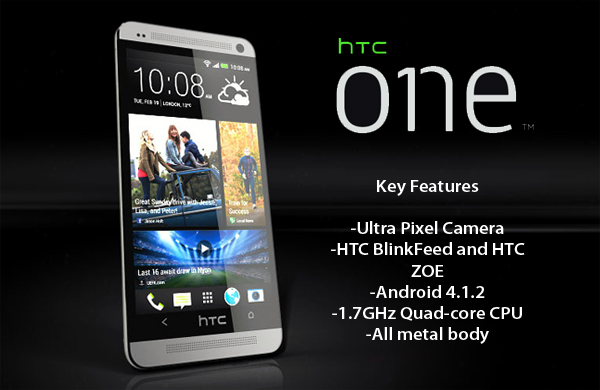
The HTC One is barely a month old since its launch last February and yet a lot of people are already considering it as one of the best smartphones released this year. And this is not that surprising as HTC has delivered a phone that is not only pleasing to look at but is also jam packed with features and software that leaves (most of)its competition in the dust.

In the display department, the One features a 4.7-inch Super LCD3 capacitive touchscreen with a screen resolution of 1080 x 1920 pixels and a pixel density of 469 pixels per inch. The screen is protected by Corning’s Gorilla Glass panel technology.


In terms of performance, the HTC One runs on Android 4.1.2 Jelly Bean and is powered by a Qualcomm APQ8064T Snapdragon 600 chipset with a 1.7GHz quad-core processor with Adreno 320 GPU. There’s 2GB of RAM and 32GB or 64GB worth of on-board storage.

However, the HTC One’s crowning glory comes from the camera department. In contrast with other manufacturers who try to outdo each other by putting a camera with the most pixel in their devices, HTC is trying to set their own bar by using a camera with “ultrapixels”. Basically the camera sensor in the device can gather 300 percent more light than most conventional cameras and yet retain the size of 4MP sensor.


A few other cool things to note about the HTC One are the numerous features that the company has incorporated into the handset by means of its HTC Sense 5. These include the HTC Blinkfeed, a news and social media aggregator that is shown on the phone’s home screen, HTC Zoe which makes use of the device’s camera to create a rich multimedia experience, and lastly HTC BoomSound that utilizes the two front-facing speakers to deliver true stereo audio for an immersive audio experience.


Another smartphone heavy weight to make its grand entrance this quarter is the Samsung Galaxy S4. The phone made its debut at the company’s “Unpacked” event in NYC last week. And although a lot of people were sort of disappointed with the lack of innovation in terms of design, Samsung still managed to get a hype out of the event and out of the phone.

For starters, the S4 packs some serious muscle power with its Exynos 5 Octa chipset that features two quad-core processors clocked at 1.6GHz and 1.2GHz respectively and a PowerVR SGX 544MP3 GPU. It also has 2GB of RAM and will come in 16GB, 32GB and 64GB variants. The display on the S4 is a 5-inch 1080p Super AMOLED capacitive touchscreen with Gorilla Glass 3 panel.

The Galaxy S4 has a 13-megapixel rear camera and a 2MP camera at the front, both of which are capable of capturing 1080p videos at 30 fps. And just like the HTC One, The Galaxy S4 features a number of nifty software and apps that maximizes the use of its hardware.


These include dual camera recording which allows the phone to use both front and rear cameras at the same time to record videos. There’s also a host of other camera functions such as Sound & Shoot that lets users record five seconds of audio before taking a shot and the Drama shot function which allows the phone to take more than 100 shots in four seconds so that the user can select the best captured images to composite in a single frame.

An eraser function (anti-photo bomb feature) is also present to acts similarly with the Drama shot but allows users to remove any unwanted elements in a photo. Furthermore, Samsung has tossed in a few other apps including a host of “S” apps such as Samsung’s health-oriented app – the S health.


Other notable features include the Group Play which allows users to use multiple phones as stereo speakers in sync, Samsung Home Sync and Smart Switch for seamless data transfer among other NFC enabled devices, Samsung Knox for BYOD (Bring You Own Device) users who want to compartmentalize their phone’s content into personal and work and of course the much talked about Smart Scroll and Smart Pause features that uses eye-tracking technology.

Both phones sport LTE Cat 3, and the usual mix of Superphone basics including Wi-Fi 802.11 a/ac/b/g/n, Bluetooth 4.0, accelerometer, gyro and proximity sensors, compass and HTML5 support to name a few.

So there you have it everyone. Which super phone do you think is the better – The HTC One or the Samsung Galaxy S4? Share with us your thoughts by leaving a comment below. You can also find us on Facebook, Twitter, Pintrest and Google Plus. And please, don’t forget to subscribe to our blog for more Filipino lifestyle stories. 


The gaming console industry is about to experience another major revolution with the rumored arrival of the newest generation of consoles from Sony and Microsoft. Sony is first on the line with the Sony PS4 scheduled to be announced on February 20 in New York while Microsoft is rumored to make public the arrival of the new Xbox by Q3 of 2013.


And as expected rumors and information leaks has spread over the internet like wildfire as the said date draws near. But what should we expect from these new generation of gaming consoles? In this week’s edition of Tech Tuesdays on TFL, we’ve consolidated all information on the internet about these two machines to give us a heads up on what’s to come.

SONY PLAYSTATION 4

The new Sony PlayStation 4 will be announced tomorrow February 4, 2013 at Manhattan, New York. As for hardware specifications, it will be powered by AMD’s x86 processors and will pack a Radeon GPU with 18 GCN units. There’s probably 4-8GB of RAM of the GDDR5 variety and it has also been rumored to pack around 1.84 teraflops of overall computation power.


As for the controllers, rumors suggest that the PS4 controller will have the same shape and relatively the same dimensions of controllers from previous versions but will now have Vita-like touch sensitive surfaces replacing the usual analog sticks we’ve seen in the past. There are also rumors that it will also have remodeled shoulder buttons as well as an interactive touchscreen at the middle where the start and select button used to be.

Lastly, since the new console will use a new architecture, Sony hopes to solve the problem of backward compatibility with the use of streaming games over the internet. Yes, you heard it right. The PS4 is rumored to have the capability to stream games, specifically those developed for previous versions over the internet.

MICROSOFT XBOX 720

Microsoft on the other hand plans to release their next generation Xbox gaming console before Christmas of 2013, so we should expect its announcement by Q3 or early Q4 of this year. In contrast to the PlayStation 4, details about the Xbox 720 (assuming it will be called by that name) are still in murky waters.

There’s not much about the new console that is certain for now but according to rumors, the Xbox 720 will have relatively the same specs as its rival – the PlayStation 4 in terms of hardware specifications. Both consoles will be powered by AMD processors and will have powerful GPUs to support graphics intensive games.


As for the controller, rumors suggest that the Xbox 720 might still use a control pad but more emphasis will be given to its Kinect motion based controller technology which is not really that surprising as this technology offers a lot of promise and applications that Microsoft sees as a worthy investment for the future.

Reports also suggest that just like the PS4, the Xbox 720 will have a featured aimed at preventing the use of second hand games. This would mean that users won’t be able to trade in old titles anymore in order to raise funds to purchase new games. A related rumor also suggested that the new console would need an active internet connection in order to play games. This is to ensure that all games played will be tethered to a specific console profile making it hard for anyone to resell games.

Lastly, reports suggest that the Xbox 720 might not be called that way at all and that Microsoft is planning a different route in terms of the name of its new machine. Popular codenames include the Xbox Infinity and Xbox Loop.

What are your thoughts about the PS4 and the Xbox 720? Please do tell us by leaving a comment below. You can also find TFL on Facebook, Twitter, Pinterest and Google Plus or subscribe to our blog for other Filipino lifestyle stories.


Huawei is one of the few Chinese brands that’s making waves in the mobile phone industry today. In CES 2013, the company wowed the public with three amazing smartphones which include the gigantic Ascent Mate that features the industry’s largest phablet screen at 6.1 inches, the competitively priced quad-core Ascend D2 and of course the W1 the company’s first Windows powered smartphone.


And just today, Huawei announced two more devices to add to its growing family of smart gadgets. The first is smartphone is rumored to be announced during this year’s Mobile World Congress and will be the smaller brother of the Ascend D2. Appropriately the phone is to be named as the Ascend D2 mini and will feature a 4.0-inch display, an 8 megapixel camera, 1GB of RAM, a dual-core processor and will run on Android Jelly Bean.

Another smartphone that is schedule for release in the coming future is the Huawei 4Afrika. The Huawei 4Afrika will be slightly modified version of the W1 announced earlier in CES. According to reports, the phone will have relatively the same hardware as the W1. This includes the W1’s 4.0-inch LCD screen with a resolution of 800x480 pixels, its 1.2GHz dual-core processor, 512 of RAM, 4GB of internal memory, a micro-SD expansion slot and the 5MP rear camera.

Software-wise, the Huawei 4Afrika will come with custom apps designed by local African developers for Africa which is intended to drive the African public to the use of affordable smartphones. This phone is scheduled to go on sale later this month in several countries including Egypt, Ivory Coast, Kenya, Morocco, Nigeria and South Africa.


With the way things are going, it seems Huawei plans to establish a strong presence in the world market as a solid, reliable and affordable brand of phones. Do you think they stand a chance against well-known brands like Samsung, Sony or LG? Do tell us by leaving a comment below.

You can also subscribe to our blog or add us up on Facebook, Twitter, Pinterest and Google Plus for the latest news, features, updates and trends about Filipinos and their lifestyle.


The phablet is the newest trend that is now gaining momentum in the mobile phone industry. And as with other trends in history, a lot of people are jumping into the bandwagon to get themselves in the “in and trendy” crowd. And in response to this growing fascination with supersized phones, many of the biggest brands in the industry is coming up with their own version of the phablet.

In this week’s Tech Tuesdays on TFL, we take a look at the newest players in the Phablet industry that are set to compete with the industry’s standard – the Samsung Galaxy Note 2.

HTC Butterfly


Display Type Super LCD3 capacitive touchscreen, 16M colors
Display Size 1080 x 1920 pixels, 5.0 inches (~441 ppi pixel density)
Protection Corning Gorilla Glass 2
SOUND - Beats Audio sound enhancement
Card slot microSD, up to 32 GB
Internal 16 GB (11 GB user available) storage, 2 GB RAM
WLAN Wi-Fi 802.11 a/b/g/n, Wi-Fi Direct, DLNA, Wi-Fi hotspot
Bluetooth Yes, v4.0 with A2DP
NFC and USB Yes
Primary Camera 8 MP, 3264x2448 pixels, autofocus, LED flash
Primary Camera Features Simultaneous HD video and image recording, geo-tagging, face and smile detection
Video Yes, 1080p@30fps, stereo sound rec., video stabilization
Secondary Camera Yes, 2.1 MP, 1080p@30fps
Operating System Android OS, v4.1 (Jelly Bean), upgradable to v4.2 (Jelly Bean)
Processor Quad-core 1.5 GHz Krait
Graphics Adreno 320


Huawei Ascend Mate


Display Type IPS+ LCD capacitive touchscreen, 16M colors
Display Size 720 x 1280 pixels, 6.1 inches (~241 ppi pixel density)
Multitouch Yes
Protection Corning Gorilla Glass
SOUND - Dolby mobile sound enhancement
Card slot Yes, up to 32 GB
Internal 2 GB RAM
WLAN Wi-Fi 802.11 a/b/g/n, dual-band, Wi-Fi Direct, DLNA, Wi-Fi hotspot
Bluetooth and USB Yes, v4.0 with A2DP, LE, EDR
Primary Camera 8 MP, 3264x2448 pixels, autofocus, LED flash
Primary Camera Features Geo-tagging, face detection, HDR
Video Yes, 1080p@30fps
Secondary Camera Yes, 1 MP, 720p@30fps
Operating System Android OS, v4.1 (Jelly Bean)
Chipset Huawei K3V2
Processor Quad-core 1.5 GHz


ZTE Grand S


Display Type Capacitive touchscreen, 16M colors
Display Size 1080 x 1920 pixels, 5.0 inches (~441 ppi pixel density)
Multitouch Yes
Card slot microSD, up to 32 GB
Internal 16 GB storage, 2 GB RAM
WLAN Wi-Fi 802.11 a/b/g/n, dual-band, DLNA, Wi-Fi hotspot
Bluetooth and USB Yes
Primary Camera 13 MP, autofocus, LED flash
Primary Camera Features Geo-tagging, touch focus, face detection
Video Yes, 1080p@30fps
Secondary Camera Yes, 2 MP, 1080p@30fps
Operating System Android OS, v4.1 (Jelly Bean)
Processor Quad-core 1.7 GHz


Sony Xperia Z


Display Type TFT capacitive touchscreen, 16M colors
Display Size 1080 x 1920 pixels, 5.0 inches (~441 ppi pixel density)
Multitouch Yes, up to 10 fingers
Protection Shatter proof and scratch-resistant glass with Sony Mobile Bravia Engine 2
Card slot microSD, up to 64 GB
Internal 16 GB, 2 GB RAM
WLAN Wi-Fi 802.11 a/b/g/n, dual-band, Wi-Fi Direct, DLNA, Wi-Fi hotspot
Bluetooth and USB Yes
Primary Camera 13 MP, 4128x3096 pixels, autofocus, LED flash
Primary Camera Features Geo-tagging, touch focus, face detection, image stabilization, HDR, sweep panorama
Video Yes, 1080p@30fps, continuous autofocus, video light, video stabilizer
Secondary Camera Yes, 2 MP, 1080p@30fps
Operating System Android OS, v4.1.2 (Jelly Bean), planned upgrade to v4.2 (Jelly Bean)
Chipset Qualcomm MDM9215M / APQ8064
Processor Quad-core 1.5 GHz Krait


LG Optimus Vu


Type HD-IPS LCD capacitive touchscreen, 16M colors
Size 768 x 1024 pixels, 5.0 inches (~256 ppi pixel density)
Multitouch Yes
SOUND - Dolby mobile sound enhancement
Card slot No
Internal 32 GB storage, 1 GB RAM
WLAN Wi-Fi 802.11 b/g/n, Wi-Fi Direct, DLNA, Wi-Fi hotspot
Bluetooth and USB Yes with NFC
Primary Camera 8 MP, 3264x2448 pixels, autofocus, LED flash
Primary Camera Features Geo-tagging, face detection, image stabilization
Video Yes, 1080p@30fps, LED video light
Secondary Camera Yes, 1.3 MP
Operating System Android OS, v4.0.4 (Ice Cream Sandwich)
Chipset Nvidia Tegra 3
Processor Quad-core 1.5 GHz


Lenovo K900


Type IPS LCD capacitive touchscreen, 16M colors
Size 1080 x 1920 pixels, 5.5 inches (~401 ppi pixel density)
Multitouch Yes
Protection Corning Gorilla Glass 2
Card slot microSD, up to 32 GB
Internal 2 GB RAM
WLAN Wi-Fi 802.11 a/b/g/n, dual band, Wi-Fi hotspot
Bluetooth and USB Yes
Primary Camera 13 MP, autofocus, dual-LED flash
Primary Camera Features Geo-tagging, touch focus, face detection
Video Yes, 1080p@30fps
Secondary Camera Yes, 2 MP
Operating System Android OS, v4.2 (Jelly Bean)
Chipset Intel Atom Z2580
Processor Dual-core 1. 8 GHz


Cherry Mobile Titan


Type Capacitive Touch screen,
Size 5.0-inch, WVGA (800 x 480 pixels) ~ 187ppi
Multitouch 5-point multi-touch feature
Card slot microSD up to 32GB
Internal 4GB of internal storage
WLAN Yes
Bluetooth and USB YEs
Primary Camera 5MP auto-focus camera
Primary Camera Features dual LED flash
Video 720p HD video recording
Secondary Camera VGA Camera
Operating System Android 4.0.4 (Ice Cream Sandwich)
Chipset MediaTek MT6577
Processor 1GHz dual-core processor, ARMv7


MyPhone A919


Source


Type IPS LCD Capacitive Touch screen, 16M colors
Size 5.0-inch, (~196 ppi pixel density), 480 x 854 pixels
Card slot microSD up to 32GB
Internal 4GB of internal storage
WLAN Yes
Bluetooth and USB YEs
Primary Camera 8 MegaPixels, 3264x2448 pixels
Primary Camera Features autofocus and LED flash
Video 720p HD video recording
Secondary Camera VGA camera
Operating System Android 4.0.4 (Ice Cream Sandwich)
Chipset MediaTek MT6577
Processor 1 GHz Dual Core

So which phablet are you eyeing for? Tell us by leaving a comment below. You can also add us up on Facebook, Twitter, Pinterest and Google Plus, or subscribe to our blog using our RSS Feeds.


Hello everyone, the tech world is once again buzzing with anticipation as we are only a few hours away from the opening of the world’s largest consumer electronics show – CES 2013. This annual event is held in the Las Vegas Convention Center in Nevada and is the place where manufacturers of electronic goods show off their latest creations to the public.


This year, over 3000 exhibitors are expected to flaunt and introduce their newest products straight from their top secret mad labs. From the newest generation of TVs, mobile phones, computers and portable devices, CES is definitely the place to be for all tech lovers out there.

So what are we expecting to see this year? Here are a few things that have already leaked on the internet a few days and hours ago before the official opening of the event.

DISPLAY TECHNOLOGY – a hot topic in CES this year are about how manufacturers are pushing the boundaries in terms of display technology. One particular innovation that’s making waves is Ultra HD displays. In fact, Toshiba has already announced an 84-inch Ultra HD 4K TV a few hours ago. There is also news that TV screens are going to get bigger this year with displays exceeding the 100-inch mark.


Moreover, there will also be a more diverse selection of TVs as more and more manufacturers are adopting OLED displays for their TV lineup. And because of this, OLED and LED displays are expected to be relatively cheaper compared to previous years.

GAMING AND COMPUTING – of course CES wouldn’t be complete without the latest on gaming and computing. A recent newsmaker in this field is Nvidia with its announcement of two very interesting product – The Tegra 4 mobile quad-core chip and an Android Game controller called Project shield. Based on reports, the Tegra 4 chip will be the world’s fastest mobile processor which features 72 GPU cores and an ARM Cortex-A15 quad-core CPU. This chip is also scheduled to power the SHIELD portable gaming console which features an advanced sound processing technology and connectivity options to allow game relaying from a computer connected to a network.


Other PC, tablet and smartphone manufacturers are also expected to show off their latest devices, specifically their latest android and Windows 8 powered gadgets. Lenovo for example has already spread the word about its Yoga 11S Windows 8 convertible device.

PRACTICAL LIVING – Last but definitely not the least is the practical living section. According to reports and press conferences, this year’s CES will feature several companies and brands involved in the development of practical living technology. That is, the particular sector of the IT industry involved in the invention and innovation of products that help people become more efficient and more productive such as home automation, motion-based technology and even self-driving cars.

So there you have it everyone. What types of technology are you most excited to see at CES? Do tell us by leaving a comment below. You can leave your messages and shout outs on Facebook, Twitter, Pinterest and Google Plus. Lastly, please do subscribe to our blog for the latest and freshest stories on Filipino lifestyle. Until next time!


Hello everyone! Sorry if I missed out on last week’s episode of Tech Tuesdays on TFL. I was kind of busy with all the Christmas party preparations, exchange gifts and the likes. But now that I’m back,  we’ll be talking about a very timely topic that most of you might have already done with your Christmas bonuses and your 13th month pay – SHOPPING.


According to a survey done by Google Philippines, a lot of Filipinos are now searching more for information about gadgets especially during the start of the holiday season. I believe it is primarily because the gadgets that we use today have come to a state so advance compared to previous decades that they are more intricately intertwined with our lives making them more and more of a necessity rather than a luxury. 

Moreover, our gadgets have evolved so far that they can now perform multiple functions in one package.
So if you’re planning to get yourself or get a loved one a new gadget this Christmas, it can easily become a pain when choosing which gadget would you buy and which would you likely to avoid. Well, despair no more, as today we will be talking about which gizmos are a match to your lifestyle and personality. If you’re all set, shall we begin?

Netbooks vs. Ultrabooks – the portable computer system is taking a major turn these past few years. As power and flexibility is crossing over into the mobile domain with the introduction of powerful devices with slim form factors, a trend is slowly becoming visible in terms of what the future of mobile computing will be. And that future is probably be the one ruled by ultrabooks.


As more and more PC manufacturers are developing machines that fit the ultrabook or slimbook profile, competition is slowly becoming stiffer by the minute. Ultrabook prices are slowly going down so if you’re really that excited to get one, I suggest waiting a bit more to let the prices stabilize. But if you’re really into saving a lot of money and you’re not that critical whether or not your laptop has an ivy bridge processor or a super slim profile, a netbook can be a good option for youl.

Black Berries – Research in Motions Black Berry smartphones have recently experienced a massive price drop. But don’t be fooled, because it might be that retailers are just emptying their BlackBerry shelves in order to give way to the new fleet of RIM devices coming in January 2013. These new devices will sport updated features that will most likely make current BB devices look old and out dated.


For hardcore BB enthusiasts, getting an upgrade or an extra berry today might not be the best idea and you’d be better off waiting for the L-series next year. But for those who just want a bare bones BlackBerry experience, getting a RIM device right now seems to be a right choice.

Gaming Consoles – Gaming consoles have also experienced a huge dip in retail prices this past few months. The Xbox 360 with Kinect now sells for around P14k which comes bundled with at least 3 games. The same goes for Sony’s PS3 which retails at almost identical price point. The Nintendo Wii on the other hand now retails for less than P10,000 for the base unit which makes it extremely affordable compared last year.


And with the exception of the Wii U, the Xbox 360 and PS3 are still the flagship gaming consoles for Microsoft and Sony respectively which ensures that you’ll still be getting the first serving of games from developers.

iPhone 5 – the iPhone 5 has made waves this year. It was one of the most anticipated devices to be announced and released this year just alongside the Google Nexus 4 and Microsoft’s Surface tablet. However, in my honest opinion, getting an iPhone 5 today may not be a smart move especially for fans of Apple out there.


This is because, in true Apple tradition, the announcement of a new generation device would mean the coming of a much faster and slightly improved “S” version the following year, which is what happened with the iPhone 3 and 3GS and the iPhone 4 and 4S. So if you’re really into the Apple iPhone craze, you might want to hold your horses until next year when Apple would release an iPhone 5S.

DSLRs and ILCs – Camera systems have recently enjoyed success and patronage among Filipinos. As more and more Pinoys are getting hooked to photography, camera manufacturers are improving their product line by adding more affordable yet equally powerful DSLR cameras. This, just like what happened with ultrabooks have pushed prices down and heightened the competition among different brands. That is why getting a full size DSLR would be a great idea for this holiday season as these camera systems are slowly becoming mainstream.


ILCs on the other hand are still quite expensive. They are also quite rare, with manufacturers only producing one to three models of interchangeable lens cameras in their entire product line. For now, their less bulky profile doesn’t trump over their high price tag, so it wouldn’t be advisable to get one now. Instead get a less pricey DSLR with the same specs of the ILC that you want.

Windows Phones – Another grey area when shopping for gadgets would be Windows phones. There are currently two types of Windows phones on sale right now – the legacy devices powered by Windows Phone 7+ and the newer Windows Phone 8 devices. And just like its direct competitor, Blackberries, Windows phones have two sides of the story.


On the one side, WP7 devices are now very affordable compared 12 months ago. Nokia’s Lumia phones, which include the Lumia 610, 800 and 900 are now all priced below the P20,000 price range, so for those looking for the Metro UI experience, getting the first generation of WP devices would be a really good bargain. The only catch is that Microsoft would have very little support for these devices in the future as they have already planned to push for WP8.

On the other hand, WP8 devices are still quite expensive and few. The only manufacturers which have a ready supply of Windows Phone 8 smartphones out in the market would be Nokia with their Lumia 920, 820 and the budget friend 620; and HTC with their 8X and 8S devices. However, owners of WP8 devices are ensured that they will be getting future updates in contrast to users of WP7+ platform.

So there you have it. I hope this post was able to help some of you who are still undecided on getting a new gadget this holiday season. If you have any comments, suggestions and reactions, please do share them with us by leaving a comment below. You can also reach us on Facebook, Twitter, Pinterst and Google Plus or subscribe to our blog for the latest and freshest news, features and updates about Filipinos and their lifestyle.


In the corporate world, the concept of buying, selling and merging different companies is no longer something out of the ordinary. As a lot of companies experience losses and other financial hardships, many of them will resort to selling their assets to other companies to stay afloat. On the other hand, more stable companies may acquire other businesses in order to either expand their product line or even lessen the competition.


And the tech industry of course is no exception from this practice. In the past we’ve seen different companies do the buy and sell process in order to be saved from bankruptcy or other financial woes while for others it’s more for strategy.

In this week’s edition of Tech Tuesday’s on TFL, we’ll be talking about two companies who have either bough something to strengthen its portfolio or sold something in order to prevent the business from going bankrupt. And as an added bonus, we’ll be talking about a much anticipated gadget that will soon reach Philippine shores these coming weeks.  

GOOGLE BUYS BUFFERBOX

The search engine giant is trying to take on Amazon with its latest acquisition – Bufferbox. For everyone’s information, Bufferbox is an online service that compliments your purchases online by allowing the users to order things online and then deliver the package to a locker in a local store. The locker can then be unlocked using a PIN code as a key.


This process is more convenient as users will have more time to claim their purchases in a more flexible time compared if it was shipped through a postal service. Amazon offers a very similar service called Amazon Locker which is available in 7-Eleven stores and is schedules to be available in Staples and Radio shack stores as well.

NOKIA SELLS HQ IN FINLAND

It seems that the Finnish mobile phone manufacturer is still not having a few financial hurdles And this is clearly evident when it just sold today its headquarters office in Finland for 170 million euros. According to Nokia, they are at present prioritizing other resources in order to keep the company’s normal flow of operations and at this time, investing in real estate is not really part of the Nokia’s core businesses.


However, Nokia will still use the 48,000 square meters of office real estate as they will continue their operations in the said building, but on a lease. The building has been housing Nokia’s HQ since 1997 and is located in Espoo, Finland.

APPLE iPHONE PHILIPPINE BOUND BY DECEMBER 14

Last but definitely not the least, the Apple iPhone 5 is schedule to hit Philippine shores by December 14 along with several other countries including Albania, Bahamas, Bahrain, Bolivia, Chile, Indonesia, Israel, Malaysia, Panama, Qatar, Russia, Saudi Arabia, UAE and Venezuela to name a few.


The fifth generation iPhone is already schedule to arrive at Samsung’s territory – South Korea by December 7. While a third wave of countries will experience the iPhone on December 21 including Vietnam, Egypt, Madagascar and several other countries from Africa.

So there you have it everyone. Join us again next week as we bring you the latest news on the tech world. You may also want to subscribe to our blog or drop by our Facebook, Twitter, Pinterest and Google Plus account for more Filipino lifestyle stories about food, travel, fashion and of course technology.


The past week has been full of gadget sales and price drops courtesy of the American holiday of thanksgiving. And although we Filipinos don’t really celebrate thanksgiving and other events related to it such as Black Friday and Cyber Monday, the technology that is the Internet and online shopping has made it possible for Pinoys to enjoy the lowered prices of a lot of tech goodies offered online.


And in this week’s episode of Tech Tuesdays, we’ll be talking about two very popular products that made the record books for the most number of sales during the weekend sale in the United States. The two devices in question are the recently released Nintendo Wii U and the Samsung Galaxy Note II.

First one up is the Nintendo Wii U which sold around 400,000 units during its first week of sales. The console was first released on November 18 all over the U.S. However, it didn’t fly off immediately as reports from Twitter indicated that although there was a crowd of people at Nintendo’s flagship store in New York, other stores elsewhere were not having the same experience.


Fortunately, Nintendo made a complete turnaround during Black Friday as the company sold over 300,000 Wii U units just for the first week of its release. This was primarily due to the number of Black Friday deals and discounts from retailers that made the price drop close to the $100 price point. Moreover, Nintendo’s handheld consoles – the 3DS and the DS also sold well, having a combined sales figure of over 500,000 units.

Another sales milestone last week was that from Samsung with their Galaxy Note II. After just 2 months of its launch on September 26, 2012; Samsung’s phablet has reached the 5 million mark in terms of worldwide sales. The Note II is available in almost 128 countries, so it’s not surprising that it hit the 2 million quicker than its predecessor, the original Galaxy Note which took more than 5 months to reach 5 million mark. The Galaxy S3 is also doing pretty well with sales reaching into the 30 million plus range.


The Galaxy Note II is already available in the Philippines at prices starting at P31,000 while the Nintendo Wii U is set to arrive on our shores in the coming weeks, maybe even days.


Did you also buy anything from the Black Friday sale or the Cyber Monday sale? Do tell us your experience by leaving a comment below. You can also add us up on Facebook, Twitter, Pinterest and Google Plus or subscribe to our blog for more updates in the world of Filipino living.


Professional and sub professional camera systems are now incredibly within reach to ordinary consumers thanks to lowered prices and wider options in terms of brand and features. Digital SLRs for example have experienced a considerable price drop compared three to five years ago. But nowadays, a new batch of more compact camera systems are slowly emerging and gaining popularity over consumers due to their sleek designs and less bulky bodies.


These camera systems are called ILCs or Interchangeable lens cameras or simply mirrorless cameras.  ILCs or sometimes referred to as EVIL (electronic viewfinder with interchangeable lens) cameras are basically trimmed down versions of ordinary DSLR cameras. Aside from their smaller size, they feature almost the same set of capabilities as their full size cousins. But if you’re currently looking to upgrade from your point and shoot camera to more powerful tool, will an ILC suffice for your needs or would a DSLR be a smarter investment for you?

Well, there are quite a few things to consider before deciding which system works best for you. And in today’s Tech Tuesdays episode, we’ll be talking about the different things that differentiate these two types of cameras from each other to help us identify which system would be the best choice for a person.

DIMENSIONS – Of course the main difference between a DSLR and an ILC are its dimensions. ILCs don’t have a mirror or pentaprism which is the mirror that reflects the light from the lens to the optical viewfinder that photographers use to see their subject before taking an image.  The removal of the pentaprism and the optical viewfinder allows for ILCs to be smaller in size compared to digital SLR cameras.


As a replacement for the optical viewfinder, EVIL cameras would usually make use of a small LCD screen just like ordinary compact digital cameras, which is permanently active whenever the camera is set to take a shot. There are also some models that have an electronic viewfinder (EVF) that works like a mini-LCD display, showing all the shooting options available.

BATTERY and SPEED – as a result of having an EVF that usually stays active while the camera is in use, ILCs are consumer more power compared to regular DSLRs. Another thing one has to worry about is the camera’s speed. For users who are interested in sports and action photography, a DSLR might be a better choice as they are more adept in capturing high-speed shots.


However, a lot of manufacturers nowadays have claimed that they have improved on this feature and speed of ILCs can now match those of digital SLRS.

SENSOR SIZE – Another major consideration before choosing the camera system for you is the sensor size. As ILCs are generally smaller in size compared to digital SLR cameras, imaging sensors are also restricted by their more compact forms. With the exception of Sony’s and Samsung’s ILC line, most of the brands that offer EVIL cameras have equipped their products with smaller image sensors.

In general, photographers would prefer devices with larger sensors as they are less prone to digital noise issues at higher ISO sensitivities and are often more effective especially in low light conditions. There is also an issue with compatibility of lenses available in the market. Most ILC are incompatible with existing lenses and a user would need to use an adapter in order to use lenses that are not native for that brand.
And since lenses are the most expensive components of a camera system, this feature may make EVIL cameras a more precarious investment compared to the trusted DSLR.

Pricing may also play a factor as most brands would position their product in a segment that caters to casual photographers who want an upgrade from their point and shoot cameras but are not yet ready for a full-fledged DSLR camera. In fact there are certain models of ILCs that are more expensive than other entry level digital SLRs.

However, advanced users may also choose an ILC over a digital SLR if they want the flexibility that the former provides due to its smaller and more bag-friendly size. Having said all these, the choice between getting a DSLR camera and an ILC camera would definitely depend on how a person will use it (just like what I always say when purchasing gadgets).

So there you have it guys. I hope this post was helpful to a lot of our readers. If you have anything to say about this article, please do leave a comment below as comments and suggestions are always welcome here at TFL. You might also want to add us on Facebook, Twitter, Pinterest and Google Plus or subscribe to our blog in case you want to get more Filipino lifestyle stories. 


About TFL

The Filipino Lifestyle is a team of young and hip professionals with a passion for sharing their insights on topics various about technology, gadgets, travel, food, beauty and fashion with the rest of the online world. The team’s unique mix of hobbies and interest allows The Filipino Lifestyle Blog to be a rich source of information for its readers that is both fun and interesting to read.

Like us on Facebook

2012-2015 © The Filipino Lifestyle
Planer theme
Powered by Jasper Roberts Consulting - Widget