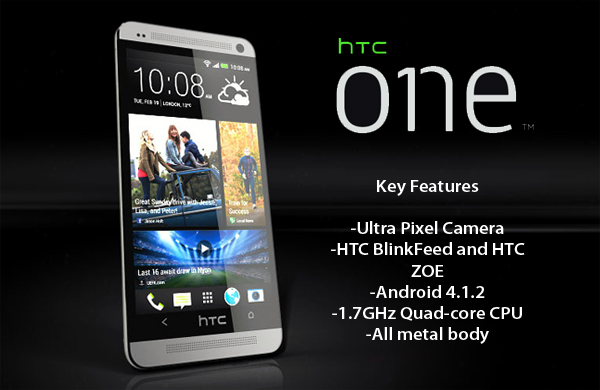
Talks about a Facebook phone has been in the rumor mills for quite some time now. Today, Facebook has finally ended all the speculations by announcing the long awaited Facebook phone (well, sort of) at an event on its headquarters in California.


However, the Facebook phone that was unveiled in the event wasn’t exactly the phone that everyone was expecting. Why? Because unlike what the rumors suggested, the phone that was presented to the world today wasn’t built by Facebook. The phone is made by HTC and runs a heavily customized version of Android – the “Facebook Home”.

Moreover, contrary to previous reports, Facebook Home is not just a home replacement app but rather a collection of apps that modify a huge part of the Android UI that will supposedly enable users to focus on their friends rather than on apps. Through the app, Facebook plans to bring in more content to users and put social networking at the front and at the center of the mobile phone experience. And this ideology is most evident in the two core apps that comprise Facebook Home – Coverfeed and Chat Heads.


Coverfeed is basically a glorified version of your Facebook newsfeed presented in edge-to-edge photos in the phone’s home screen. It displays images and status updates from a user’s friends. A user can swipe left and right to view other updates from his/her friends, double-tap on the home screen to like the update or view comments and likes by tapping the area located at the bottom of the home screen.

Chat Heads on the other hand is an improved version of the Facebook Messenger app that sits above the entire UI of the phone, allowing users to gain access to the phone’s messaging app anywhere in the phone. Users have the option to move 1 or a group of chat heads across the different edges of the screen and will remain visible as long as the users wants to interact with it.

Navigation on the Facebook Home has also drastically changed. The common back and navigation buttons are gone and are replaced by gesture-based commands carried out by a “bobble” which is the circular icon that contains the phone owner’s photo (or profile picture) located at the bottom of the screen. Users can swipe up from the bobble which will launch the app drawer.


The app drawer is divided into two segments. Once a user swipe’s up from the bobble, the favorites app drawer is first shown. Obviously this is where the user’s most used and favorite apps are located. The favorites app drawer also has three tabs at the top that lets users instantly upload photos to Facebook, post a status update or location. Swiping to the left of the favorites app drawer will direct the user to the main app drawer that holds all the apps currently installed on the phone.

Swiping the bobble to the left will launch the Facebook messaging app while swiping the bobble to the right will allow users to go back to the last app that they’ve opened.

Facebook Home will initially be released on April 12 on several handsets including the HTC One, HTC One X+, Samsung Galaxy SIII, Samsung Galaxy S4, Samsung Galaxy Note II and of course the HTC First (exclusive to AT&T). Facebook has also promised to bring monthly updates and improvement to the app as well as add support for additional phone models and manufacturers including Lenovo, ZTE, Huawei and Sony.

Now it would be interesting how Google would react in the future with Facebook Home especially if Mark Zuckerberg’s dream of putting the app in every smartphone would come true. This is because unlike other home replacement apps or custom ROMs, Facebook Home can have the ability to literally take over and change a phone and make Android OS lose its identity in the process.

What about you guys? What do you think? Is Facebook invading Android? And how do you think Google would react to this strategy? Share with us your thoughts by leaving a comment below. For other Filipino Lifestyle stories, do subscribe to our blog or add us up on Facebook, Twitter                , Pinterest or Google Plus.


Hello everyone, it’s another Tuesday and it’s time again to get ourselves updated with the latest news in the tech industry. And this week, the biggest news is about rumored phones; from the long awaited to the surprisingly fast to emerge.


Let’s start off with the Facebook phone. Last week the social networking giant sent out invites to press with a teaser saying that the company will have a new “Home” on Android. And today a developer build of the alleged Facebook phone was leaked on the internet. According to reports, the Facebook Phone will run on a device built by HTC (codenamed HTC Myst) and will sport a modified version of Android 4.1.2, a 4.3-inch screen, Sense version 4.5, a 5MP rear camera, a dual-core processor and at least 1GB of RAM.

The new phone will also come with a Facebook-oriented home launcher which will let users see Facebook news feeds and updates right on the home screen. There will also be a more standard clock screen, shortcuts for launching apps and search via Google. The home replacement app will also have a feature called Chat Heads that will allow users to use Facebook’s chat functionality anywhere in the device.


Rumors are also suggesting that Facebook may offer a toned-down version of the “Home” app to other OEM who run either the stock Android UI or on top of a skin such as Samsung’s TouchWiz UI.

Next on the list is the long rumored Amazon smartphone. Rumors about the development of the device were fanned again after the Ex-Microsoft Executive Charlie Kindel announced that he’ll be joining Amazon to work on a “secret” project. According to a post on his Google Plus account, he’ll be building a team in Amazon that involves a project that the company has little experience with.


Furthermore, a post on Kindel’s LinkedIn page reveals that the team he’s supposed to build will be compromised of developers, program managers and product managers. Charlie Kindel’s previous work in Microsoft involved the development of servers and the Windows 7 application platform so it doesn’t take a genius to establish a connection between Kindel and Amazon’s possible plan of developing its own smartphone that may complement the Kindle Fire tablet in the future.

Last on the list is Samsung with its Galaxy S4 Mini. According to reports, the S4 mini might debut within the week. The S4 mini is reportedly scheduled to be released by late May or early June. Earlier reports say that the phone might come in several variants.

These include a single-SIM, dual-SIM, LTE and a Chinese version with TD-SCDMA. The S4 mini may also have two variants when it comes to the processor. According to reports, the dual-SIM version of the phone may have a 1.6GHz dual-core processor while the single-SIM version will reportedly have a quad-core processor.


All version of the S4 mini will have an 8MP camera at the back, 1GB of RAM, a 4.3-inch display and will run on Android 4.2.2 Jelly Bean.

And that concludes this week’s edition of Tech Tuesdays on TFL. Which phone are you most excited about? Do tell us by leaving a comment below. You can also add on Facebook, Twitter, Pinterest and Google Plus. And please don’t forget to subscribe to our blog for other tech news and other stories about Filipino lifestyle.


Hello everyone, after a month of hiatus, Tech Tuesdays on TFL is back to give you the latest and trendiest tech topics in the face of the internet. And this week, we’ll be talking about two of the hottest and most talked about smartphones today – the HTC One and the recently announced Samsung Galaxy S4.

Both phones aren’t officially available in the global market yet, but both the HTC One and the Galaxy S4 have been pitted against each other numerous time on various websites, blogs and of course in social networking sites. So this week, let’s take a closer look at these two super phones so that we’ll have an idea on what each handset provides to us consumers.


The HTC One is barely a month old since its launch last February and yet a lot of people are already considering it as one of the best smartphones released this year. And this is not that surprising as HTC has delivered a phone that is not only pleasing to look at but is also jam packed with features and software that leaves (most of)its competition in the dust.

In the display department, the One features a 4.7-inch Super LCD3 capacitive touchscreen with a screen resolution of 1080 x 1920 pixels and a pixel density of 469 pixels per inch. The screen is protected by Corning’s Gorilla Glass panel technology.


In terms of performance, the HTC One runs on Android 4.1.2 Jelly Bean and is powered by a Qualcomm APQ8064T Snapdragon 600 chipset with a 1.7GHz quad-core processor with Adreno 320 GPU. There’s 2GB of RAM and 32GB or 64GB worth of on-board storage.

However, the HTC One’s crowning glory comes from the camera department. In contrast with other manufacturers who try to outdo each other by putting a camera with the most pixel in their devices, HTC is trying to set their own bar by using a camera with “ultrapixels”. Basically the camera sensor in the device can gather 300 percent more light than most conventional cameras and yet retain the size of 4MP sensor.


A few other cool things to note about the HTC One are the numerous features that the company has incorporated into the handset by means of its HTC Sense 5. These include the HTC Blinkfeed, a news and social media aggregator that is shown on the phone’s home screen, HTC Zoe which makes use of the device’s camera to create a rich multimedia experience, and lastly HTC BoomSound that utilizes the two front-facing speakers to deliver true stereo audio for an immersive audio experience.


Another smartphone heavy weight to make its grand entrance this quarter is the Samsung Galaxy S4. The phone made its debut at the company’s “Unpacked” event in NYC last week. And although a lot of people were sort of disappointed with the lack of innovation in terms of design, Samsung still managed to get a hype out of the event and out of the phone.

For starters, the S4 packs some serious muscle power with its Exynos 5 Octa chipset that features two quad-core processors clocked at 1.6GHz and 1.2GHz respectively and a PowerVR SGX 544MP3 GPU. It also has 2GB of RAM and will come in 16GB, 32GB and 64GB variants. The display on the S4 is a 5-inch 1080p Super AMOLED capacitive touchscreen with Gorilla Glass 3 panel.

The Galaxy S4 has a 13-megapixel rear camera and a 2MP camera at the front, both of which are capable of capturing 1080p videos at 30 fps. And just like the HTC One, The Galaxy S4 features a number of nifty software and apps that maximizes the use of its hardware.


These include dual camera recording which allows the phone to use both front and rear cameras at the same time to record videos. There’s also a host of other camera functions such as Sound & Shoot that lets users record five seconds of audio before taking a shot and the Drama shot function which allows the phone to take more than 100 shots in four seconds so that the user can select the best captured images to composite in a single frame.

An eraser function (anti-photo bomb feature) is also present to acts similarly with the Drama shot but allows users to remove any unwanted elements in a photo. Furthermore, Samsung has tossed in a few other apps including a host of “S” apps such as Samsung’s health-oriented app – the S health.


Other notable features include the Group Play which allows users to use multiple phones as stereo speakers in sync, Samsung Home Sync and Smart Switch for seamless data transfer among other NFC enabled devices, Samsung Knox for BYOD (Bring You Own Device) users who want to compartmentalize their phone’s content into personal and work and of course the much talked about Smart Scroll and Smart Pause features that uses eye-tracking technology.

Both phones sport LTE Cat 3, and the usual mix of Superphone basics including Wi-Fi 802.11 a/ac/b/g/n, Bluetooth 4.0, accelerometer, gyro and proximity sensors, compass and HTML5 support to name a few.

So there you have it everyone. Which super phone do you think is the better – The HTC One or the Samsung Galaxy S4? Share with us your thoughts by leaving a comment below. You can also find us on Facebook, Twitter, Pintrest and Google Plus. And please, don’t forget to subscribe to our blog for more Filipino lifestyle stories. 


The phablet is the newest trend that is now gaining momentum in the mobile phone industry. And as with other trends in history, a lot of people are jumping into the bandwagon to get themselves in the “in and trendy” crowd. And in response to this growing fascination with supersized phones, many of the biggest brands in the industry is coming up with their own version of the phablet.

In this week’s Tech Tuesdays on TFL, we take a look at the newest players in the Phablet industry that are set to compete with the industry’s standard – the Samsung Galaxy Note 2.

HTC Butterfly


Display Type Super LCD3 capacitive touchscreen, 16M colors
Display Size 1080 x 1920 pixels, 5.0 inches (~441 ppi pixel density)
Protection Corning Gorilla Glass 2
SOUND - Beats Audio sound enhancement
Card slot microSD, up to 32 GB
Internal 16 GB (11 GB user available) storage, 2 GB RAM
WLAN Wi-Fi 802.11 a/b/g/n, Wi-Fi Direct, DLNA, Wi-Fi hotspot
Bluetooth Yes, v4.0 with A2DP
NFC and USB Yes
Primary Camera 8 MP, 3264x2448 pixels, autofocus, LED flash
Primary Camera Features Simultaneous HD video and image recording, geo-tagging, face and smile detection
Video Yes, 1080p@30fps, stereo sound rec., video stabilization
Secondary Camera Yes, 2.1 MP, 1080p@30fps
Operating System Android OS, v4.1 (Jelly Bean), upgradable to v4.2 (Jelly Bean)
Processor Quad-core 1.5 GHz Krait
Graphics Adreno 320


Huawei Ascend Mate


Display Type IPS+ LCD capacitive touchscreen, 16M colors
Display Size 720 x 1280 pixels, 6.1 inches (~241 ppi pixel density)
Multitouch Yes
Protection Corning Gorilla Glass
SOUND - Dolby mobile sound enhancement
Card slot Yes, up to 32 GB
Internal 2 GB RAM
WLAN Wi-Fi 802.11 a/b/g/n, dual-band, Wi-Fi Direct, DLNA, Wi-Fi hotspot
Bluetooth and USB Yes, v4.0 with A2DP, LE, EDR
Primary Camera 8 MP, 3264x2448 pixels, autofocus, LED flash
Primary Camera Features Geo-tagging, face detection, HDR
Video Yes, 1080p@30fps
Secondary Camera Yes, 1 MP, 720p@30fps
Operating System Android OS, v4.1 (Jelly Bean)
Chipset Huawei K3V2
Processor Quad-core 1.5 GHz


ZTE Grand S


Display Type Capacitive touchscreen, 16M colors
Display Size 1080 x 1920 pixels, 5.0 inches (~441 ppi pixel density)
Multitouch Yes
Card slot microSD, up to 32 GB
Internal 16 GB storage, 2 GB RAM
WLAN Wi-Fi 802.11 a/b/g/n, dual-band, DLNA, Wi-Fi hotspot
Bluetooth and USB Yes
Primary Camera 13 MP, autofocus, LED flash
Primary Camera Features Geo-tagging, touch focus, face detection
Video Yes, 1080p@30fps
Secondary Camera Yes, 2 MP, 1080p@30fps
Operating System Android OS, v4.1 (Jelly Bean)
Processor Quad-core 1.7 GHz


Sony Xperia Z


Display Type TFT capacitive touchscreen, 16M colors
Display Size 1080 x 1920 pixels, 5.0 inches (~441 ppi pixel density)
Multitouch Yes, up to 10 fingers
Protection Shatter proof and scratch-resistant glass with Sony Mobile Bravia Engine 2
Card slot microSD, up to 64 GB
Internal 16 GB, 2 GB RAM
WLAN Wi-Fi 802.11 a/b/g/n, dual-band, Wi-Fi Direct, DLNA, Wi-Fi hotspot
Bluetooth and USB Yes
Primary Camera 13 MP, 4128x3096 pixels, autofocus, LED flash
Primary Camera Features Geo-tagging, touch focus, face detection, image stabilization, HDR, sweep panorama
Video Yes, 1080p@30fps, continuous autofocus, video light, video stabilizer
Secondary Camera Yes, 2 MP, 1080p@30fps
Operating System Android OS, v4.1.2 (Jelly Bean), planned upgrade to v4.2 (Jelly Bean)
Chipset Qualcomm MDM9215M / APQ8064
Processor Quad-core 1.5 GHz Krait


LG Optimus Vu


Type HD-IPS LCD capacitive touchscreen, 16M colors
Size 768 x 1024 pixels, 5.0 inches (~256 ppi pixel density)
Multitouch Yes
SOUND - Dolby mobile sound enhancement
Card slot No
Internal 32 GB storage, 1 GB RAM
WLAN Wi-Fi 802.11 b/g/n, Wi-Fi Direct, DLNA, Wi-Fi hotspot
Bluetooth and USB Yes with NFC
Primary Camera 8 MP, 3264x2448 pixels, autofocus, LED flash
Primary Camera Features Geo-tagging, face detection, image stabilization
Video Yes, 1080p@30fps, LED video light
Secondary Camera Yes, 1.3 MP
Operating System Android OS, v4.0.4 (Ice Cream Sandwich)
Chipset Nvidia Tegra 3
Processor Quad-core 1.5 GHz


Lenovo K900


Type IPS LCD capacitive touchscreen, 16M colors
Size 1080 x 1920 pixels, 5.5 inches (~401 ppi pixel density)
Multitouch Yes
Protection Corning Gorilla Glass 2
Card slot microSD, up to 32 GB
Internal 2 GB RAM
WLAN Wi-Fi 802.11 a/b/g/n, dual band, Wi-Fi hotspot
Bluetooth and USB Yes
Primary Camera 13 MP, autofocus, dual-LED flash
Primary Camera Features Geo-tagging, touch focus, face detection
Video Yes, 1080p@30fps
Secondary Camera Yes, 2 MP
Operating System Android OS, v4.2 (Jelly Bean)
Chipset Intel Atom Z2580
Processor Dual-core 1. 8 GHz


Cherry Mobile Titan


Type Capacitive Touch screen,
Size 5.0-inch, WVGA (800 x 480 pixels) ~ 187ppi
Multitouch 5-point multi-touch feature
Card slot microSD up to 32GB
Internal 4GB of internal storage
WLAN Yes
Bluetooth and USB YEs
Primary Camera 5MP auto-focus camera
Primary Camera Features dual LED flash
Video 720p HD video recording
Secondary Camera VGA Camera
Operating System Android 4.0.4 (Ice Cream Sandwich)
Chipset MediaTek MT6577
Processor 1GHz dual-core processor, ARMv7


MyPhone A919


Source


Type IPS LCD Capacitive Touch screen, 16M colors
Size 5.0-inch, (~196 ppi pixel density), 480 x 854 pixels
Card slot microSD up to 32GB
Internal 4GB of internal storage
WLAN Yes
Bluetooth and USB YEs
Primary Camera 8 MegaPixels, 3264x2448 pixels
Primary Camera Features autofocus and LED flash
Video 720p HD video recording
Secondary Camera VGA camera
Operating System Android 4.0.4 (Ice Cream Sandwich)
Chipset MediaTek MT6577
Processor 1 GHz Dual Core

So which phablet are you eyeing for? Tell us by leaving a comment below. You can also add us up on Facebook, Twitter, Pinterest and Google Plus, or subscribe to our blog using our RSS Feeds.


The past week has been full of gadget sales and price drops courtesy of the American holiday of thanksgiving. And although we Filipinos don’t really celebrate thanksgiving and other events related to it such as Black Friday and Cyber Monday, the technology that is the Internet and online shopping has made it possible for Pinoys to enjoy the lowered prices of a lot of tech goodies offered online.


And in this week’s episode of Tech Tuesdays, we’ll be talking about two very popular products that made the record books for the most number of sales during the weekend sale in the United States. The two devices in question are the recently released Nintendo Wii U and the Samsung Galaxy Note II.

First one up is the Nintendo Wii U which sold around 400,000 units during its first week of sales. The console was first released on November 18 all over the U.S. However, it didn’t fly off immediately as reports from Twitter indicated that although there was a crowd of people at Nintendo’s flagship store in New York, other stores elsewhere were not having the same experience.


Fortunately, Nintendo made a complete turnaround during Black Friday as the company sold over 300,000 Wii U units just for the first week of its release. This was primarily due to the number of Black Friday deals and discounts from retailers that made the price drop close to the $100 price point. Moreover, Nintendo’s handheld consoles – the 3DS and the DS also sold well, having a combined sales figure of over 500,000 units.

Another sales milestone last week was that from Samsung with their Galaxy Note II. After just 2 months of its launch on September 26, 2012; Samsung’s phablet has reached the 5 million mark in terms of worldwide sales. The Note II is available in almost 128 countries, so it’s not surprising that it hit the 2 million quicker than its predecessor, the original Galaxy Note which took more than 5 months to reach 5 million mark. The Galaxy S3 is also doing pretty well with sales reaching into the 30 million plus range.


The Galaxy Note II is already available in the Philippines at prices starting at P31,000 while the Nintendo Wii U is set to arrive on our shores in the coming weeks, maybe even days.


Did you also buy anything from the Black Friday sale or the Cyber Monday sale? Do tell us your experience by leaving a comment below. You can also add us up on Facebook, Twitter, Pinterest and Google Plus or subscribe to our blog for more updates in the world of Filipino living.


Hot on the heels of the Apple iPhone 5, it appears that Samsung has no plans to let Apple or any of its competitors to grab the pole position for the most number of smartphone sales in the market. With the Samsung Galaxy S3, just short of a year in stores since its launch of the second quarter of 2012, the South Korean electronics giant is already hinting of its successor.

Recently, rumors have surfaced that Samsung is already working on the Galaxy S4. At first it seemed that it was all rumors and there was little truth to the news, but a few weeks of brewing revealed that there is possibly a good chance that all the rumors are true. In fact, a spec sheet of the reported handset has already been posted on several hardcore tech websites.


And based on preliminary specifications, it is evident that Samsung is once again raising the bar very high with the S4 scheduled to improve not only on design but also in performance. For starters, the 4.8-inch screen of the S3 is further increased with the new Galaxy S having a 5.0-inch display with a pixel density of 441 pixels per inch, with a layer of Corning’s Gorilla Glass 2 on top.

Connectivity wise, data connection speeds will play around HSDPA to even LTE speeds, with Wi-Fi 802.11 a/b/g/n, Bluetooth v4.0 with A2DP and NFC. There might also be a 13 Megapixel camera at the back with autofocus, LED flash, simultaneous HD video and image recording, geo-tagging, touch focus, face and smile detection, image stabilization and a video capture rate of 30fps at 1080p resolution.


Performance-wise the SGS4 will be powered by 2 GHz Cortex A-15 quad-core processor on an Exynos 5450 Quad chipset. There will be at least 16 GB of onboard storage and 2 GB of RAM. There will also be an accelerometer, gyro and proximity sensor, compass, a barometer and will most probably run Android 4.2 Jelly Bean.

Other notable features that the phone may have include the S-voice natural language commands and dictation software, Smart Stay eye tracking, active noise cancellation with dedicated mic and a 50GB dropbox account.

Scheduled announcement of the device is set on the first quarter of 2013.

Don’t forget to add TFL on Facebook, Twitter, Pinterest and Google Plus. You can also subscribe to their Feeds for more Filipino lifestyle stories about fashion, food, travel, technology and gadgets.


Last week, Apple and Microsoft took center stage and announced their newest line of products. Apple made headlines last Tuesday when they introduced the iPad mini alongside the 4th generation iPad, the new iMac, Mac Mini and the 13-inch MacBook Pro with retina display. A few days after, Microsoft stayed true to its promise and released the Microsoft Surface tablet and Windows 8 & Windows RT.


Google was supposed to hold a special Android event Today (October 29, 2011 – PST) in New York City, but was cancelled due to hurricane Sandy. But lo and behold, the power of a hurricane isn’t enough to stop Google from announcing their newest set of Nexus devices to compete head to head with what Apple and Microsoft unveiled last week.

Here is a quick rundown of the specs of each device starting with the Nexus 4, followed by the Nexus 10 and the upgraded Nexus 7.


LG NEXUS 4

The Nexus 4 will be manufactured by LG and is based on the LG Optimus G. It will feature a 4.7-inch True HD IPS Plus capacitive touchscreen with a resolution of 768 x 1280 pixels, will have a pixel density of 318 pixels per inch, protected by Corning’s Gorilla Glass 2.

The phone’s internal memory is set at 8GB or 16GB and there is no expansion card slot. In terms of connectivity, it will have speeds of up to 21 Mbps (HSDPA), Wi-Fi 802.11 a/b/g/n connectivity, Bluetooth 4.0 with A2DP and support for NFC.


It will have a rear 8MP camera capable of capturing images with a maximum resolution of 3624x2448 pixels and will have autofocus, touch focus, geo-tagging, face detection, photoshere and LED flash. The phone will be powered by a 1.5Ghz Quad-core Krait processor – Qualcomm’s APQ8064 Snapdragon chipset with Adreno 320 GPU and will run on Android 4.2 Jelly Bean.

The Nexus 4 will also have an accelerometer, gyro sensor, proximity sensor, compass and barometer. It will also have A-GPS with GLONASS support, HTML 5 support for the browser and active noise cancellation with dedicated microphone. This device will be in direct competition with Apple’s iPhone 5 and other Microsoft Windows Phone 8 devices like the HTC 8X and the Samsung Ativ S.


SAMSUNG GALAXY NEXUS 10

Created by Samsung for Google, the Nexus 10 will directly compete with the 4th generation iPad and the slew of Windows 8 tablets. It is expected to be available by November 2012 and will sport as the name implies a 10.1-inch Super PLS TFT capacitive touchscreen with a resolution of 2500x1600 pixels, will have a pixel density of 299 pixels per inch and will be protected by a Gorilla Glass panel.

Just like the Nexus 4, this device will not support card expansions and will have an onboard internal storage of either 16GB or 32GB. It will have of course support for Wi-Fi 802.11 a/b/g/n with Wi-Fi direct, Bluetooth 4.0 with A2DP, USB 2.0 and NFC.


There’s a 5MP camera at the back capable of capturing images with a maximum resolution of 2592x1936 pixels. The camera also features geo-tagging, touch focus, autofocus, face detection and a LED flash. There’s a 2MP front facing camera for video conferencing and the back camera can capture videos at 1080 pixels at 30 fps.

This tablet will run Android 4.2 Jelly bean and will be powered by a 1.7Ghz Cortex A15 Dual-core processor – Exynos 5250 chipset and Mali-T604 GPU. Sensors available on the tablet include an accelerometer, a gyro sensor, a proximity sensor and a compass.


NEXUS 7 HSPA+

Google also unveiled an upgraded version of the Nexus 7 tablet. This time the device will have additional connectivity options, HSPA+ connection to be specific. Specs-wise this new version of the Nexus 7 will share almost identical features as the original Nexus 7, namely: the 7-inch IPS LCD capacitive display, Nvidia Tegra 3 chipset with the 1.3 Ghz Quad-core Cortex-A9 processor and ULP GeForce GPU.


Google has also announced that they will be slashing the prices of the existing Nexus 7 tablets with the 32GB version now at $249 and the 16GB version at $199 while the 32GB HSPA+ version will retail for $299 once it’s released next month.

So, which Nexus device caught your eye? Tell us by leaving a comment below. You can also add us up on Facebook, Twitter, Pinterest and Google Plus or subscribe to our blog for more Filipino lifestyle stories about gadgets, technology, fashion, travel and food.


In a few days from now, Microsoft is scheduled to release the very much awaited update on its operating system – Windows 8. Based on the consumer preview that Microsoft has made public a few months ago, this new operating system promises a fully revamped architecture and user interface design that works well both on laptops and desktops but as well in tablets.


Although Microsoft is also set to release their own surface-branded tablet, we are already seeing a lot of devices from other manufacturers slowly making an appearance to coincide with the launch of the new OS. In this edition of Tech Tuesdays at TFL, let’s breeze through some of those devices.

Samsung Ativ Tab

Samsung was one of the first manufacturers to announce a Windows 8 powered tablet. Their Ativ Tab measures 6.61” tall, 10.46” wide and 0.35” thick and weighs around 1.2 pounds. The device also has a 10.1-inch HD LCD display.


It also has USB and Micro-HDMI ports, a microSD card slot, NFC, and Wi-Fi & Bluetooh 4.0 capabilities. In terms of performance the Ativa tab will be powered by a 1.5GHz dual core processor on a Qualcomm Snapdragon S4 chip, and 64GB of internal storage. It will also feature a 5MP rear camera with LED flash while the front will have a 1.9MP camera.

The Ativ Tab will come with a trial version of Microsoft Office 2013 plus a few extras from Samsung such as ChatOn, and Samsung’s music portal and photo editor.

Asus Vivo Tab

Asus’s Vivo Tab looks pretty much like the Asus Transformer Android tablets. The Vivo Tab will come with an 11.6-inch Super IPS+ panel with a resolution of 1366x768 pixels and will have support for 10-finger multi-touch. The device will be powered by the next generation Intel Atom processor (possibly from the Clover Trail Family) and will have 2GB or RAM plus 64GB of on-board storage. In terms of connectivity, the Vivo tab will have support for Wi-Fi 802.11 b/g/n and Bluetooth 4.0.


Moreover, it will feature a G-sensor, a gyroscope, a light sensor and e-compass as well as an 8MP autofocus camera with LED flash at the back, a 2MP front facing camera for video calls and conferencing and a 1024-level Wacom digitizer stylus.

Acer Iconia W700

The Acer Iconia W700 will come in three versions on October 26: Two models will have 64GB of storage and will run on an Intel Core i3 Ivy bridge processor while the third model will have an Intel Core i5 processor with 128GB worth of storage.

The Acer Iconia W700 will feature an 11.6-inch screen with support of up to 10 touch points. It will have an IPS display with a resolution of 1920X1080 pixels, a USB port and a micro-HDMI output. The W700 can be used with a wireless Bluetooth keyboard together with a tilt-able cradle dock which will provide an additional 3 USB ports when used with the tablet.


The W700 will also have an Intel HD Graphics 4000 chipset with 4GB of memory plus a Dolby Home Theatre v4 audio-enhancing technology. At the back of the device is a 5MP camera capable of recording 1080p HD video while a 1MP camera can be found at the front of the device.

Sony Vaio Duo 11

Another big name to announce a W8 tablet last week was Sony with its Vaio Duo 11. Unlike other tablets in our list, the Vaio Duo 11 features a full slide-out keyboard. The Duo 11 also has a HDMI and USB ports and surprisingly a full-sized VGA port.


The Vaio can come with an optional battery extension that doubles operating time but puts additional girth into its already chunky profile. The built-in keyboard is slightly more compact than most notebooks and features a trackpoint-style navigation nub in the middle.

As for computing power, the Duo 11 will have an Intel Core i7-3517U processor with 4-8GB of Ram and up to 256GB of SSD storage. The 11.6-inch display of the Vaio will have a resolution of 1080p and according to reports provide incredibly bright and crispy images.

HP ElitePad 900

HP on the other hand announced its business oriented W8 tablet – the ElitePad 900. The ElitePad 900 is a 10-inch tablet that runs on an Atom-based Intel Clover trail processor with up to 2GB of RAM. It has a Core i5 processor and comes with either a 32GB or 64GB eMMC drive.


The screen is 400-nit IPS display with Gorilla Glass and has a resolution of 1280x800 pixels. It also has an 8MP rear camera and a 1080p front facing camera. As with other tablets these days, it will have Wi-Fi and Bluetooth support. However, the ElitePad is lacking a USB port, and instead only has a micro-SD card slot and a USB adapter.

But HP is offering a host of extras for the ElitePad 900. For starters, users can get a dock for the tablet that offers a lock slot, an additional 4 USB ports, HDMI and VGA connectors, a line-out jack and Gigabit Ethernet. HP will also be selling those so-called “Smart Jackets” which are tablet cases that have additional features such as USB ports, HDMI output and optional battery slice.

Lenovo ThinkPad Tablet 2

And last but definitely not the least is the Lenovo ThinkPad Tablet 2. The ThinkPad Tablet 2 is the Windows 8 version of the first ThinkPad tablet was released last year and ran on Android 3.1 Honeycomb. The ThinkPad Tablet 2 now runs on Windows 8 with a 1.86GHz Intel Atom processor from the Clover trail family.


The screen is around 10.1 inches with a resolution of 1366x768 pixels. There will also be an optional dock that comes with an Ethernet port, 3 USB ports and an HDMI output. There’s a fat chance that the ThinkPad Tablet 2 will come with the full version of Office 2013 and will cost around $799 with the keyboard.


Smartphones can now be found everywhere. Gone are the days when the prices of smartphone were so high that it made owning one almost impossible. The advent of open source programs and operating systems like Google’s Android has made it a reality for smartphones to be affordable to the masses.


And as time passed by, a more diverse selection of smartphones, specifically those that run on Android have surfaced. There are dual-SIM phones, those with TV tuners, and lately those which are water and shock resistant.

In this post, we’ll talking about those smartphones that offer the smart functionality of a full-fledged mobile operating system and at the same time providing users with a device that offer the brute ruggedness and robustness of other outdoor gear.

SAMSUNG S5690 GALAXY XCOVER – The Galaxy Xcover is one of two Samsung android phones that offer IP67 certification. It is dust tight and waterproof up to a depth of 1m for 30 minutes. But just like any other smartphone in the company’s line up, the Xcover features a moderately capable 800MHz Marvell MG2 processor, 512MB of RAM, a 3.15MP camera with autofocus and LED flash, FM radio, A-GPS, accelerometer, proximity sensor and compass.


The screen size is around 3.65 inches with a resolution of 320x480 pixels, which is protected by Corning Gorilla Glass. The Xcover runs on Android 2.3 Gingerbread and was released on October 2011.

SAMSUNG RUGBY SMART I847 – The Rugby Smart is another rugged android phone from Samsung with an IP67 certification. Just like the Xcover, the Rugby Smart is dust tight and waterproof of up to 1m for 30 minutes. It also has MIL-STD-810F certification which means that it is salt, dust, humidity, rain, vibration, solar radiation, transport and thermal shock resistant.


The device features a Super AMOLED capacitive touchscreen with a resolution of 480x800 pixels. It has a 5MP camera with autofocus and LED flash, a 1.4 GHz Scorpion processor and Adreno 205 GPU. It has 512MB of RAM, built in accelerometer, proximity sensor and compass. The Rugby Smart runs on the latest release of Gingerbread – version 2.3.6 and is distributed by US carrier AT&T.

MOTOROLA DEFY+ - The Defy+ is the second generation of Motorola’s Defy series that has IP67 certification. The phone has a 3.7-inch screen with a resolution of 480x854 pixels which is protected by Gorilla glass. The Defy+ is powered by a 1GHz Cortex A8 processor, PowerVR SGX530 GPU and 512MB of RAM.


The rear camera of the device has a resolution of 5MP with autofocus, LED flash, geo-tagging and image stabilization. It also has active noise cancellation features, an FM radio, A-GPS support, accelerometer, proximity sensor and compass.

PANASONIC ELUGA DL1 – Panasonic may not be that popular for making smartphones in the Philippines, but they do have a few android phones in their arsenal. The Eluga DL1 which was released in February is an IP57 certified phone that is waterproof up to 1 meter for 30 minutes. It has an OLED 4.3-inch capacitive display with a resolution of 540x960 pixels.


The DL1 has an 8MP snapper at the back with autofocus, touch focus and geo-tagging. It has a dual-core 1GHz processor, 1GB of RAM and a TI OMAP 4430 chipset. And just like the other phones listed here, it has an accelerometer, proximity sensor and compass.

PANASONIC ELUGA POWER – If the DL1 still doesn’t satisfy your needs, Panasonic a beefed up version of the Eluga DL1 – the Eluga Power. The phone runs on Android Ice Cream Sandwich v4 and is powered by a 1.5GHz dual core Krait processor and has 1GB of RAM. It has an Adreno 225 GPU and a Qualcomm MSM8270 Snapdragon chipset.


The Eluga power also boasts a bigger 5.0-inch screen with a resolution of 720x1280 pixels. It’s rear camera (with autofocus, touch focus and geo-tagging) takes photos at a maximum of 8MP. And just like the DL1 it’s IP57 certified.

SONY XPERIA GO – This phone is IP67 certified and features Sony’s Bravia Engine. Although not Gorilla glass protected, the Xperia Go has a scratch resistant display. It has a NovaThor U8500 chipset and is powered by a dual-core 1GHz Cortex A9 processor with 512MB of RAM.

The screen is 3.5 inches and has a resolution of 320x480 pixels. It also has an accelerometer, FM radio, A-GPS support, proximity sensor and a compass. The Xperia Go has a 5MP rear camera with autofocus, LED flash, geo-tagging, touch focus, face and smile detection and 3D sweep panorama.

Lastly, the phone runs on Android 2.3 Gingerbread but an ICS update is scheduled in the near future.

SONY XPERIA ACRO S – The Xperia Acro S is the big brother of the Xperia Go.  It has IP57 certification and features the same scratch resistant screen shatter proof glass and Bravia Engine as the Xperia Go. It sports a Qualcomm MSM8260 Snapdragon chipset and is powered by a dual-core 1.5GHz Scorpion processor. Graphics and display-wise, the screen of the Acro S is a 4.3-inch capacitive touchscreen with a resolution of 720x1280 pixels.


Aside from these features, the Acro S also has an accelerometer, proximity sensor, compass, A-GPS support with GLONASS and an Adreno 220 GPU. Its primary camera captures images at 12 megapixels with autofocus, LED flash, geo-tagging, face and smile detection, touch focus, 3D sweep panorama and image stabilization.

The Acro S would come with Android v4 Ice cream sandwich as standard.

SONY XPERIA V – The Xperia V on the other hand is the sleeker slightly powerful upgrade to the Acro S. In terms of screen size and resolution, the two are practically identical. They are also the same when it comes to their CPUs and GPUs.

Connectivity options as well as sensors are also the same on both phones. And even the operating system version and IP57 certification are the same.  The thin line that separates the two phones are their dimensions and the camera.


The Acro S has the overall dimensions of 126 x 66 x 11.9 mm while the Xperia V has dimensions of 129 x 65 x 10.7 mm. The Xperia V is also lighter at 120g compared to the Acro S at 147g. The former also has a more capable camera which has a resolution of 13MP.

What’s your best bet from these rugged yet smart mobile phones? You can tell us by leaving a comment below or leaving a message on our Facebook or Twitter profiles. Until next time everyone! Read.Know.Be Filipino! 

About TFL

The Filipino Lifestyle is a team of young and hip professionals with a passion for sharing their insights on topics various about technology, gadgets, travel, food, beauty and fashion with the rest of the online world. The team’s unique mix of hobbies and interest allows The Filipino Lifestyle Blog to be a rich source of information for its readers that is both fun and interesting to read.

Like us on Facebook

2012-2015 © The Filipino Lifestyle
Planer theme
Powered by Jasper Roberts Consulting - Widget