The current age has brought about a new trend with it. This trend is called the “Selfie.” This six letter word defines the activity of taking your own photo with a camera. It can be with a group of friends or at a special occasion or even with your pet! Every person comes up with their own version.

Due to many advancements in technology along with this amazing new trend, many smartphone manufacturers have come up with newer versions of mobile phones that have the best camera quality present for those umpteen number of selfies that everyone takes. These selfie phones are being sold at a number of stores along with many marketplaces who are offering them at discounted prices such as Kaymu and Ebay etc.

The best Selfie Phones for the year:

Samsung Galaxy S7 (Unofficial)


Everyone is eagerly waiting for this phone to launch. With the new Android 6.0 operating system and Quad-core 4.0 GHz 64 bit processor, it will be a very stable phone. The back camera will be 16 MP with a 5.1 MP front camera with flash for all your selfie needs.

Microsoft Surface Phone (Rumoured)

Surface Phone Concept art

This phone has a 5.5in Quad-HD AMOLED display to view all your pictures in the most beautiful manner. It offers 21Mp rear and 8Mp front cameras to snap away those lovely selfies that you want to take. Moreover, it has a 64 to 128 GB storage space to keep all that you love.

HTC One M10 (Unofficial)

HTC One M10 Concept Art

This is the upcoming and highly coveted selfie phone as it offers a whopping 27 MP front and back camera auto face detection focus technology. When you buy this phone, not only will you have high resolution pictures, you won’t even have to work that hard for them.

LG G5 (Unofficial)

LG G5 Concept Art
This LG phone is one the most popular upcoming ones. It offers a 20 MP back camera and a 10 MP front facing camera for you to look classy and sophisticated in all your pictures. Along with that, it has a true IPS HD display for a beautiful picture quality.

Oppo Find 9 (Unofficial)

Oppo Find 9 has a large 5.5 inch Quad HD display that offers superior picture quality and beautiful colors for you to enjoy. When it comes to cameras, it has a 20 MP secondary camera and an 8 MP front camera for all your selfie needs.

Sony Xperia Z6 (Unofficial)

This phone will make you love yourself in all your selfies. In terms of cameras, it has a 27 MP rotator camera scanner that will take your selfies in all the angles that you will love. Moreover, the screen is of 5 inches with 4k display resolution.

iPhone 7 (Unofficial)

Everyone knows the picture quality that the iPhone has to offer. This phone will have a 12 MP back camera and a 5 MP front camera for you to look absolutely great in. For men and women alike, they will be overjoyed with this one.

HTC Desire Eye (Available)


This is the phone to get if you are a selfie fanatic. It has a 13 MP shooter at the front and the rear. Both of the cameras have their own dedicated flash for the best pictures possible. Along with that, the wide 22 mm lens gives a large angle to all your selfies.

Asus ZenFone (Available)


This phone has a 13 MP front facing camera that has an LED flash present with it. Moreover, it offers a wide 88 degree angle so that all the aspects of your selfie are taken in. It also has features such as panorama, slow motion, smart remove and time lapse present.

LG V10 (Available)


This phone has not one but two front facing cameras that you can use for all your selfies. The two front facing cameras are of 5 MP and the back camera is 13 MP. The cameras feature multi view and snap options with it.


About the Author: Sab

I cover Mobile, Internet, Good and Bad of Technologies. I’ve been a technology writer for the last three years. If you have any question and feel free to contact me on Gtalk – it’s a beautiful way to get contacted me directly.


It seems like just about every other week a new piece of technology is released, from just about all of the major cell phone companies.

Apple is at the top of the list and there is no question that the majority of people that use Apple products will run out to the store, even wait in line for lengthy periods of time, just to get their hands on the brand new iPhone 6.


However, a great deal of people are wondering to themselves whether getting the new phone is actually worth it.

In reality, the new devices that are being released do not have too many things that are brand new, in comparison to the past models that are already out there. While it is true that there are new designs and new pieces of technology that are integrated into each mobile device (that it is considered the hip thing to do to get the brand new iPhone), the overall price is starting to get a bit high for a cell phone.

In the past, most of the new iPhone's that came out would hover somewhere around five hundred dollars, which most people thought was a lot of money in the first place. However, the new iPhone 6's go well above that are are posted at six hundred and fifty dollars, which has made a great deal of people's eyebrows.


Nearly two thirds of a thousand dollars is a great deal of money to spend on a device that is going to become outdated in a year or so anyway and in reality, the capabilities are virtually the same. The new iPhone 6 will be slightly bigger than the older models, which seems to be a trend with Apple products, as they are also making the new iPads bigger as well.


Apple also claims that the features that are on the iPhone 6 far surpass that of the older models, although the majority of people simply use their cell phone to surf the internet, play games, use applications, make phone calls and text.

All of these things can be done on each and every one of the older models, so it has become a highly debated topic among a lot of people as to whether it is worth it to shell out the great deal of money that is required to get your hands on the new iPhone 6.

When it comes down to it, it really is a personal preference. If you are one of those people that loves having the newest of the new models of technology, then you are probably going to be satisfied with putting up the money for a new phone. These people likely already have an iPhone 5 and can probably trade their phones in or sell them to get a great deal off of the newer models anyway, so in this respect it can be very worth it for these people.


Additionally, if you prefer a bigger screen, you may want to go ahead and get the iPhone six, but in all reality, the majority of people are probably better off keeping their older model iPhone's.

The truth is that they are slightly more advanced, but the increase in technology is not enough to rush out to the store, wait in line and get a new device, all while causing a major blow to your pockets. If Apple had come out with a brand new model that had some amazing new type of technology that has not been seen before in passed iPhone's, it would probably be worth it, but in this case it is looking like the better idea to skip buying one.


About Author: This article was written by Andy G, a tech geek and Linux fan from Austria. At the present moment he maintains firmware and driver download website called Helpjet.

When traveling, you will likely have three consistent companions: your family (if you’re bringing them), your plans (if you have any), and your smartphone (no ifs, ands or buts). You will likely use your smartphone more than anything to navigate, communicate, and do whatever you need to do to make your travelling as smooth as possible.


What makes a smartphone so great is that there are all sorts of different applications available to make your life so much easier. If you are having a hard time navigating a new city, GPS apps abound. If you can’t understand a language, translation apps are available. If there isn’t an app for one of your needs yet, give it time, and someone will create it.

Here are 5 apps for your smartphone that will help you make sure that your trips go perfectly:


Trip Splitter takes care of who owes what when handling expenses on a trip or dinner. It works great even for large parties because you can put in as many participants as you want. You can also email participants a reminder after the trip is over if you don’t want to take care of everything right away. This is great for travelling in a large group that isn’t necessarily financially linked or for certain business situations. 


This is a travel app that has equal use at home, allowing you to split up a shared bar tab or simply let you figure out how much everyone owes for pizza. If you find yourself a social person, this app is definitely worth downloading.


If you are travelling, then a Virtual Private Network (VPN) can be the savior to your privacy and data. If you are travelling, you are likely using many public networks, which can be incredibly risky to use since hackers can intercept sent data (including private communications and financial information) over unprotected networks and then use it against you.


What a VPN will do is connect your computer through an encrypted “tunnel” of sorts to an offsite server that no one can infiltrate, and this server will handle your requests and send you whatever information you want just like normal. Using this server also has the benefit of masking your IP Address and location data, which means you can get around regional restrictions and even possibly allow you to take advantage of regional pricing for airline tickets.

There are several options to choose from, but ExpressVPN is a great choice in particular due to its compatabilty with smartphones on any operating system.

CITY MAPPER

If you are travelling to a major city, you should check out Citymapper. It is one of the most popular and highest-quality apps for figuring out transit (in almost any form) in major cities, particularly in the United States, which can be harder to navigate than many European cities. Some of the things that are especially useful are real-time updating of departure times, bike routes, and alerts if there is a disruption on a route so you can adjust accordingly.


If you put in a location within a city, this app will find a way for you to get there. In fact, it will probably find multiple ways for you to get there. When you’re in a new place, there will be nothing you are more thankful for.


If you are going to a different country that doesn’t speak English (which is most of them), you want this application on your phone. While not perfect, Google Translate is improving constantly. It has most every language you will need and is fast enough to beat out most other translation devices available and certainly faster than lugging around a two-way dictionary for each language you might need.


This one might be considered a little extreme for some, but jet lag is awful and can ruin a day or two of a perfectly good vacation. If you don’t want this to happen, then Entrain is the app you need both before and during your trip.


It provides you with a schedule and data for when you should seek light in order to help your body adjust to the new time zone as quickly as possible. You can use this data to adjust your circadian clock and keep up your energy after your flight. With lots of options at the press of a thumb, you won’t need to figure out anything else to get your sleep cycle in check.

Thank you for reading. Please note that any applications listed here can be found on both iTunes and Google Play. I hope that you have found something here that you are looking for so that you may travel with improved safety and convenience.


Asus today announced the mid-range smartphone that completes its PadFone range – the new Asus PadFone E.

The smartphone hybrid features a 4.7-inch 720p display, a Qualcomm Snapdragon 400 chip with a 1.4GHz Cortex A7 CPU, 1GB of RAM, a 13MP LED-enabled camera at the back and a 1820mAh battery.


The device will run on Android 4.3 Jelly Bean and just like the PadFone Infinity and PadFone Mini will come with a dock that transforms the smartphone into a tablet. The PadFone E’s dock boasts a 10.1-inch 720p display, a 1MP front-facing camera and a 5000mAh battery.

The Asus PadFone E will come in either Black or Pearl White for $560 starting in Taiwan. 

It was just a few days ago that the HTC Desire 200 was leaked on the internet through a video posted by a Vietnamese website and now the Taiwanese smartphone manufacturer is making the phone official.


Just like in the video the smartphone will sport a 3.5-inch LCD screen with a resolution of 320 x 480 pixels. The phone will have a pixel density of 165 pixels per inch and will sport Beats Audio sound enhancement.
The HTC Desire 200 will pack a Qualcomm Snapdragon S1 chipset with a single-core 1GHz CPU and 512MB of RAM. The internal memory is set at 4GB which also supports expansion via a microSD card slot. At the back of the device is a 5MP camera with a f/2.8 fixed focus camera with a 34mm lens that supports video recording.


The device will be powered by a removable 1230mAh battery, and will have 802.11 b/g/n, Bluetooth v4.0, microUSB and GPS. There’s also an accelerometer, proximity sensor and an ambient light sensor. Pricing and availability is yet to be disclosed.


Chatwing chat widget is now one of the leading chat apps online. Most users find it easy to use and effective in providing global connectivity. Another positive feedback about this dynamic chat box is the wide array of modification options giving users the opportunity to experiment with the widget’s appearance. The customization leeway and communication leverage Chatwing offers brings online advantages useful to business endeavors.


In customization, users can be as creative as they want. They have many tools available in changing every aspect of the chat box. They only have to decide whether they want the chat tool to blend it effectively in their websites or make it unique to attract attention.

Users can set the main color of the chat app, message area background, the message body background and input text. Experimenting with colors and font styles can be really fun since you have a lot to choose from. Combine colors that will result to the kind of mood you want to induce during interactions. The power of colors can not be underestimated.


The size, style and color of the font are also factors to be considered because it can affect conversations. Combinations will either make the chat activity convenient or difficult to web visitors.


If you are not satisfied with plain colors as the website chat tool’s theme, you need not get frustrated available background images are available, too. Funky, girly and formal designs are offered by Chatwing.

 This is how creative you can get with Chatwing’s high customization level! You can also upload photos of your own choice to become the background image. What’s more interesting is that you can upload MP3 links to play in the background while you are all engaged on the topic being discussed. Talk about giving your web visitors a unique and sensible chatting experience!


You can choose the language of the chatbox, too. Rename the chat app and give it an interesting title. You can also set disconnection time of the users from the chatbox, you are in control.


Aside from customization, users can also manage the chat box interactions. You are allowed to assign moderators to help you with facilitating discussions and monitoring. To lessen the tasks, activate the filters that will delete out offensive words automatically or ban obnoxious chatters real-time.

When these features are used systematically and purposefully, it will directly benefit your website because it will engage more web surfers and help in maintaining the blog’s integrity. Chatwing chat widget is truly one of the highly flexible and reliable shoutboxes online today because of its useful options and advance modification choices.

Visit Chatwing here.

Aaron Kong is an active web developer and technology enthusiast who believes in the power of open and free communication. An avid developer who enjoys playing with new gadgets and testing open source software. Find Chatwing online http://chatwing.com


Talks about a Facebook phone has been in the rumor mills for quite some time now. Today, Facebook has finally ended all the speculations by announcing the long awaited Facebook phone (well, sort of) at an event on its headquarters in California.


However, the Facebook phone that was unveiled in the event wasn’t exactly the phone that everyone was expecting. Why? Because unlike what the rumors suggested, the phone that was presented to the world today wasn’t built by Facebook. The phone is made by HTC and runs a heavily customized version of Android – the “Facebook Home”.

Moreover, contrary to previous reports, Facebook Home is not just a home replacement app but rather a collection of apps that modify a huge part of the Android UI that will supposedly enable users to focus on their friends rather than on apps. Through the app, Facebook plans to bring in more content to users and put social networking at the front and at the center of the mobile phone experience. And this ideology is most evident in the two core apps that comprise Facebook Home – Coverfeed and Chat Heads.


Coverfeed is basically a glorified version of your Facebook newsfeed presented in edge-to-edge photos in the phone’s home screen. It displays images and status updates from a user’s friends. A user can swipe left and right to view other updates from his/her friends, double-tap on the home screen to like the update or view comments and likes by tapping the area located at the bottom of the home screen.

Chat Heads on the other hand is an improved version of the Facebook Messenger app that sits above the entire UI of the phone, allowing users to gain access to the phone’s messaging app anywhere in the phone. Users have the option to move 1 or a group of chat heads across the different edges of the screen and will remain visible as long as the users wants to interact with it.

Navigation on the Facebook Home has also drastically changed. The common back and navigation buttons are gone and are replaced by gesture-based commands carried out by a “bobble” which is the circular icon that contains the phone owner’s photo (or profile picture) located at the bottom of the screen. Users can swipe up from the bobble which will launch the app drawer.


The app drawer is divided into two segments. Once a user swipe’s up from the bobble, the favorites app drawer is first shown. Obviously this is where the user’s most used and favorite apps are located. The favorites app drawer also has three tabs at the top that lets users instantly upload photos to Facebook, post a status update or location. Swiping to the left of the favorites app drawer will direct the user to the main app drawer that holds all the apps currently installed on the phone.

Swiping the bobble to the left will launch the Facebook messaging app while swiping the bobble to the right will allow users to go back to the last app that they’ve opened.

Facebook Home will initially be released on April 12 on several handsets including the HTC One, HTC One X+, Samsung Galaxy SIII, Samsung Galaxy S4, Samsung Galaxy Note II and of course the HTC First (exclusive to AT&T). Facebook has also promised to bring monthly updates and improvement to the app as well as add support for additional phone models and manufacturers including Lenovo, ZTE, Huawei and Sony.

Now it would be interesting how Google would react in the future with Facebook Home especially if Mark Zuckerberg’s dream of putting the app in every smartphone would come true. This is because unlike other home replacement apps or custom ROMs, Facebook Home can have the ability to literally take over and change a phone and make Android OS lose its identity in the process.

What about you guys? What do you think? Is Facebook invading Android? And how do you think Google would react to this strategy? Share with us your thoughts by leaving a comment below. For other Filipino Lifestyle stories, do subscribe to our blog or add us up on Facebook, Twitter                , Pinterest or Google Plus.


Hello everyone, it’s another Tuesday and it’s time again to get ourselves updated with the latest news in the tech industry. And this week, the biggest news is about rumored phones; from the long awaited to the surprisingly fast to emerge.


Let’s start off with the Facebook phone. Last week the social networking giant sent out invites to press with a teaser saying that the company will have a new “Home” on Android. And today a developer build of the alleged Facebook phone was leaked on the internet. According to reports, the Facebook Phone will run on a device built by HTC (codenamed HTC Myst) and will sport a modified version of Android 4.1.2, a 4.3-inch screen, Sense version 4.5, a 5MP rear camera, a dual-core processor and at least 1GB of RAM.

The new phone will also come with a Facebook-oriented home launcher which will let users see Facebook news feeds and updates right on the home screen. There will also be a more standard clock screen, shortcuts for launching apps and search via Google. The home replacement app will also have a feature called Chat Heads that will allow users to use Facebook’s chat functionality anywhere in the device.


Rumors are also suggesting that Facebook may offer a toned-down version of the “Home” app to other OEM who run either the stock Android UI or on top of a skin such as Samsung’s TouchWiz UI.

Next on the list is the long rumored Amazon smartphone. Rumors about the development of the device were fanned again after the Ex-Microsoft Executive Charlie Kindel announced that he’ll be joining Amazon to work on a “secret” project. According to a post on his Google Plus account, he’ll be building a team in Amazon that involves a project that the company has little experience with.


Furthermore, a post on Kindel’s LinkedIn page reveals that the team he’s supposed to build will be compromised of developers, program managers and product managers. Charlie Kindel’s previous work in Microsoft involved the development of servers and the Windows 7 application platform so it doesn’t take a genius to establish a connection between Kindel and Amazon’s possible plan of developing its own smartphone that may complement the Kindle Fire tablet in the future.

Last on the list is Samsung with its Galaxy S4 Mini. According to reports, the S4 mini might debut within the week. The S4 mini is reportedly scheduled to be released by late May or early June. Earlier reports say that the phone might come in several variants.

These include a single-SIM, dual-SIM, LTE and a Chinese version with TD-SCDMA. The S4 mini may also have two variants when it comes to the processor. According to reports, the dual-SIM version of the phone may have a 1.6GHz dual-core processor while the single-SIM version will reportedly have a quad-core processor.


All version of the S4 mini will have an 8MP camera at the back, 1GB of RAM, a 4.3-inch display and will run on Android 4.2.2 Jelly Bean.

And that concludes this week’s edition of Tech Tuesdays on TFL. Which phone are you most excited about? Do tell us by leaving a comment below. You can also add on Facebook, Twitter, Pinterest and Google Plus. And please don’t forget to subscribe to our blog for other tech news and other stories about Filipino lifestyle.


Lenovo might not be as popular a brand compared to industry heavy weights such as Samsung, LG or Sony but the company is slowly making a name for itself thanks to its affordable yet capable handsets that offer dual-SIM capability with Android’s open source operating system.


And this year, Lenovo Mobile Philippines has added four more handsets to its line of Android-powered smartphones. Two of which comes equipped with Android 4.1.2 Jelly Bean. And all four devices sport 4+ inch screens and target the mid-range to upper tier consumer groups.

LENOVO P770 – The P770 is the successor of Lenovo’s P700 and P700i smartphones that offered performance at an affordable price. And as such, the phone shares the same design aesthetics as its predecessors albeit the slightly bigger screen. The 4.5-inch screen of the device has a resolution of 540x960 pixels with a pixel density of 245 ppi.

Software-wise, the P770 improves in terms of the processor, the memory and of course the operating system. For starters, the P770 now comes with a 1.2GHz dual-core processor in contrast to the 1GHz found on its predecessor. It also has 1GB of RAM and runs on Android Jelly Bean.


Lenovo has also added a few apps they made themselves including Lenovo Power Saving and Lenovo Note. The phone’s UI is also integrated with Facebook, Skype, AccuWeather and TouchPal keyboard. And last but definitely not the least; 5GB cloud storage is also included with the device courtesy of SugarSync.

There’s 4GB worth of on-board storage, a 5MP rear camera, a VGA camera upfront and a 3500mAh battery. As with other droids these days, the P770 comes with the usual set of connectivity features and sensors including Bluetooth, Wi-Fi 802.11 a/b/g/n, an accelerometer, GPS and a compass.

LENOVO S890 – another new Jelly Bean-powered handset from Lenovo is the S890. It’s part of the company’s S-series smartphone and comes equipped with a 1.2GHz dual-core processor complemented by 1GB of RAM and a PowerVR SGX531 GPU. There’s 4GB of on-board storage with support for microSD card expansion of up to 32GB.


An 8MP snapper is placed at the back of the device while a VGA camera sits in front of the device for self-portraits and video calls. The rear camera features a LED flash, autofocus, geo-tagging, touch focus and even face detection. The rear camera is also capable of recording 720p videos.

The 5-inch display of the S890 has a resolution of 540x960 pixels with a pixel density of 220 ppi. And again, just like other smartphones today, the phone packs Bluetooth and Wi-Fi connectivity, accelerometer, proximity sensor, GPS and a FM radio. Lastly, there’s a 2250mAh battery to power the device.

LENOVO S720 – another handset for the Lenovo’s S-series is the S720. Geared towards stylish consumers, the company is branding this particular phone as Big Chic. The Big part is attributed to the phone’s 4.5-inch qHD display with a resolution of 540x960 pixels with a pixel density of 245 ppi.

The S720 comes has a MTK 6577 chipset with a 1GHz dual-core Cortex A9 processor which is complemented by a PowerVR SGX531 GPU, 512MB of RAM and 4G of storage space. It also features an 8MP camera at the back which sports a LED flash, autofocus, geo-tagging, touch focus and face detection. There’s also a 1MP front-facing camera for video conferencing and self-portraits.


The phone will be powered by a 2000mAh battery and will run Android 4.0.4 (Ice cream sandwich). The S720 will come in two Chic colours – either in white or in hot pink.

LENOVO A800 – Last but definitely not the least is the Lenovo A800. The A800 is Lenovo’s newest device that targets the entry level market. It comes equipped with a 4.5-inch screen with a resolution of 480x854 pixels with a pixel density of around 218 ppi.

The phone runs on Android 4.0.4 (Ice cream sandwich). It has 512MB of RAM and on-board storage worth 4GB with support for microSD expansion. The A800 has a MTK 6577T chipset with a 1.2GHz Cortex-A9 processor and the same type of GPU found in the S720.


A 5MP snapper is placed on the back of the phone which features auto-focus, geo-tagging and touch focus. There’s an accelerometer, proximity sensor, FM radio and GPS. Of course there’s also Bluetooth, Wi-Fi and a microUSB port.

So there you have it. Which Lenovo smartphone do you find most interesting? Share with us your thoughts by leaving a comment below. You can also find us on Facebook, Twitter, Pinterest and Google Plus or subscribe to our blog for other tech stories from around the globe.


Hello everyone, after a month of hiatus, Tech Tuesdays on TFL is back to give you the latest and trendiest tech topics in the face of the internet. And this week, we’ll be talking about two of the hottest and most talked about smartphones today – the HTC One and the recently announced Samsung Galaxy S4.

Both phones aren’t officially available in the global market yet, but both the HTC One and the Galaxy S4 have been pitted against each other numerous time on various websites, blogs and of course in social networking sites. So this week, let’s take a closer look at these two super phones so that we’ll have an idea on what each handset provides to us consumers.


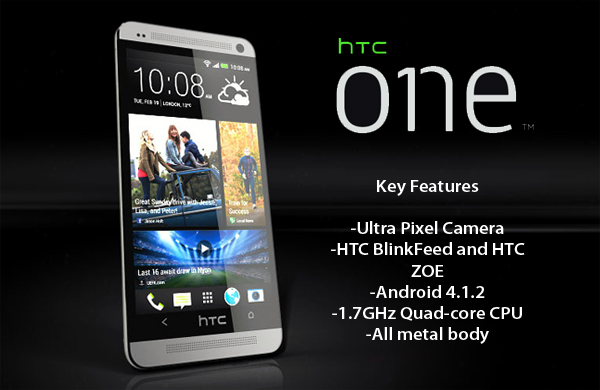
The HTC One is barely a month old since its launch last February and yet a lot of people are already considering it as one of the best smartphones released this year. And this is not that surprising as HTC has delivered a phone that is not only pleasing to look at but is also jam packed with features and software that leaves (most of)its competition in the dust.

In the display department, the One features a 4.7-inch Super LCD3 capacitive touchscreen with a screen resolution of 1080 x 1920 pixels and a pixel density of 469 pixels per inch. The screen is protected by Corning’s Gorilla Glass panel technology.


In terms of performance, the HTC One runs on Android 4.1.2 Jelly Bean and is powered by a Qualcomm APQ8064T Snapdragon 600 chipset with a 1.7GHz quad-core processor with Adreno 320 GPU. There’s 2GB of RAM and 32GB or 64GB worth of on-board storage.

However, the HTC One’s crowning glory comes from the camera department. In contrast with other manufacturers who try to outdo each other by putting a camera with the most pixel in their devices, HTC is trying to set their own bar by using a camera with “ultrapixels”. Basically the camera sensor in the device can gather 300 percent more light than most conventional cameras and yet retain the size of 4MP sensor.


A few other cool things to note about the HTC One are the numerous features that the company has incorporated into the handset by means of its HTC Sense 5. These include the HTC Blinkfeed, a news and social media aggregator that is shown on the phone’s home screen, HTC Zoe which makes use of the device’s camera to create a rich multimedia experience, and lastly HTC BoomSound that utilizes the two front-facing speakers to deliver true stereo audio for an immersive audio experience.


Another smartphone heavy weight to make its grand entrance this quarter is the Samsung Galaxy S4. The phone made its debut at the company’s “Unpacked” event in NYC last week. And although a lot of people were sort of disappointed with the lack of innovation in terms of design, Samsung still managed to get a hype out of the event and out of the phone.

For starters, the S4 packs some serious muscle power with its Exynos 5 Octa chipset that features two quad-core processors clocked at 1.6GHz and 1.2GHz respectively and a PowerVR SGX 544MP3 GPU. It also has 2GB of RAM and will come in 16GB, 32GB and 64GB variants. The display on the S4 is a 5-inch 1080p Super AMOLED capacitive touchscreen with Gorilla Glass 3 panel.

The Galaxy S4 has a 13-megapixel rear camera and a 2MP camera at the front, both of which are capable of capturing 1080p videos at 30 fps. And just like the HTC One, The Galaxy S4 features a number of nifty software and apps that maximizes the use of its hardware.


These include dual camera recording which allows the phone to use both front and rear cameras at the same time to record videos. There’s also a host of other camera functions such as Sound & Shoot that lets users record five seconds of audio before taking a shot and the Drama shot function which allows the phone to take more than 100 shots in four seconds so that the user can select the best captured images to composite in a single frame.

An eraser function (anti-photo bomb feature) is also present to acts similarly with the Drama shot but allows users to remove any unwanted elements in a photo. Furthermore, Samsung has tossed in a few other apps including a host of “S” apps such as Samsung’s health-oriented app – the S health.


Other notable features include the Group Play which allows users to use multiple phones as stereo speakers in sync, Samsung Home Sync and Smart Switch for seamless data transfer among other NFC enabled devices, Samsung Knox for BYOD (Bring You Own Device) users who want to compartmentalize their phone’s content into personal and work and of course the much talked about Smart Scroll and Smart Pause features that uses eye-tracking technology.

Both phones sport LTE Cat 3, and the usual mix of Superphone basics including Wi-Fi 802.11 a/ac/b/g/n, Bluetooth 4.0, accelerometer, gyro and proximity sensors, compass and HTML5 support to name a few.

So there you have it everyone. Which super phone do you think is the better – The HTC One or the Samsung Galaxy S4? Share with us your thoughts by leaving a comment below. You can also find us on Facebook, Twitter, Pintrest and Google Plus. And please, don’t forget to subscribe to our blog for more Filipino lifestyle stories. 


Nokia has been very busy these past few months improving and expanding their Lumia smartphone product line. Just last week the Finnish company announced two more Windows Phone 8 devices at the 2013 Mobile World Congress (MWC) in Barcelona, Spain – the Lumia 720 and the Lumia 520.

But before these two new handsets reach local stores, Nokia Philippines is already paving the way for these Lumias by announcing the availability of the Windows Phone 8-powered Nokia Lumia 920, Lumia 820 and the Lumia 620.


The Nokia Lumia 920 is the company’s current flagship model. It is powered by 1.5GHz dual-core Krait processor on a Qualcomm MSM8960 Snapdragon chipset. The Krait processor is complimented by 1GB of RAM and 32GB of on-board storage.

The Nokia Lumia 920 has the biggest screen among the three Lumias at 4.5 inches with the company’s ClearBlack display technology. The screen is of the IPS LCD type and has a resolution of 768 x 1280 pixel with a pixel density of 332 ppi which is higher than the iPhone 5 (326ppi) or the Galaxy S3 (233ppi). The display is protected by the latest generation of Corning’s Gorilla Glass panel.


At the back of the device is an 8MP camera equipped with Nokia’s PureView technology, which when paired with the phone’s Carl Zeiss optics and other features such as image stabilization, autofocus and a LED flash, allows the Lumia 920 to capture crisp and vibrant images without losing detail. The phone’s camera is also capable of capturing HD videos (1080p) with video stabilization.

For fans of self-portraits and video calls, you need not worry as the 920 is equipped with a 1.3MP front facing camera.

Next on the list is the Nokia Lumia 820. Designed for mid-range to upper-tier consumer groups, the 820 has a 4.3-inch AMOLED screen with resolution of 400 x 80 pixels and a pixel density of 217 ppi. Just like its big brother, the 820 is also equipped with Nokia’s ClearBlack display.

It is powered by 1.5GHz dual-core processor complimented by 1GB of RAM and 8GB of on-board storage. If you think 8GB of memory won’t be enough, the phone’s memory can be expandable to 64GB via a microSD card slot.


The Lumia 820 also has an 8MP camera with Carl Zeiss optics, autofocus, dual-LED flash, geo-tagging and autofocus. It can capture 1080p videos at 30 frames per second with video stabilization. There’s a front-facing VGA camera again, for self-portraits and making video calls.

And last but not the least is the Nokia Lumia 620. The Lumia 620 is the most affordable among the three phones and was designed as an entry-level WP8 phone. But don’t be deceived by this humble description as this phone packs features that makes it stand out among similar phones in this price range.

The device has a 3.8-inch TFT display with a resolution of 480 x 800 pixels and a pixel density of 246 pixels per inch, again featuring Nokia’s ClearBlack technology. It’s powered by a 1GHz dual-core processor on a Qualcomm Snapdragon chipset which is complimented by 512MB of RAM and 8GB of on-board storage. And just like the Lumia 820, this phone supports microSD expansion.


The Lumia 620 has a 5MP rear camera with autofocus, geo-tagging and LED flash. It can capture 720p videos at 30 frames per second. At the front of the phone sits a VGA camera for video calls and self-portraits.

All three phones sports the usual assortment of smartphone features such as Wi-Fi 802.11 a/b/g/n standards, Bluetooth v3+, accelerometer, proximity sensor, compass and A-GPS support with GLONASS. And of course, these three will have the usual mix of Nokia-developed Windows Phone apps such as Nokia Maps Nokia City Lens, Nokia Smart Shoot and Nokia Drive.

If you’re interested in getting any of these 3 WP8 phones, the Lumia 820 and Lumia 620 are already available at Abenson for around P20,000 and P11,000 respectively. As for the Lumia 920, the Abenson representative I’ve talked to that they’re just waiting for stocks to come in and people should expect pricing to be around P33,000 probably by April 2013.


I’ve been a regular shopper of Abensons for the last 3 years and I’ve bought several appliances, a digital camera, 2 netbooks, an iPod touch from this store and in terms of customer service, delivery and repair (in worst-case scenarios), I’ve never been disappointed with their service.

And in terms of convenience, this store allows installment purchases at 0% interest through various credit card companies giving consumers flexibility when it comes to payments. They also partner with specific credit card providers and give exclusive discounts and deals when you buy an item from them.  And with over 75 stores nationwide, it doesn’t matter whether you’re living in Metro Manila, North or South Luzon, Visayas or in Mindanao, because they’ve got you covered. J

If you want to experience these awesome Lumia phones, just drop by your nearest Abenson store.

For more Details, visit the following:

About TFL

The Filipino Lifestyle is a team of young and hip professionals with a passion for sharing their insights on topics various about technology, gadgets, travel, food, beauty and fashion with the rest of the online world. The team’s unique mix of hobbies and interest allows The Filipino Lifestyle Blog to be a rich source of information for its readers that is both fun and interesting to read.

Like us on Facebook

2012-2015 © The Filipino Lifestyle
Planer theme
Powered by Jasper Roberts Consulting - Widget