In this age of droids, iPhones, blackberries and other smartphones, it is very easy for people to forget that there was once a time when feature phones and barebone phones rule the world. Before handsets evolved color LCD and LED displays, MP3 ringtones, gigabytes worth of storage, powerful cameras and touchscreen user interface; there was an age when the norm was monochrome displays, 2G connectivity and monotone ringtones.


If you were born the first decade of the 21st century, then you probably would appreciate this nostalgic treat we have for you. If you’ve ever owned a feature phone or a barebone phone, then you might have had one of these handsets.


SIEMENS SL45 – The Siemens SL45 was the first mobile phone to feature an MP3 player with a memory card expansion slot. It debuted in 2001 and sports other notable features such as voice dialing and voice activated commands, a WAP browser, stopwatch and a calculator to name a few.


The handset weighs 88g and is powered by a Siemens/Infineon C166 processor. The device’s battery is rated at 540mAh which allows the phone to achieve up to 170 hours of standby time, approximately 5 hours of audio playback and around 240 minutes of conversation. The card expansions slot is capable of using a MMC card up to 32MB (Yes! 32 megabytes). It also has support for monophonic ringtones and a graphic monochrome display with a resolution of 101 x 80 pixels.


PHILIPS SAVVY – Philips isn’t really the most popular brand of mobile phone in the country even during the last decade. But they did release a phone in the market that’s affordable enough for a lot of people and generally does the job of typical phones during that time. And that phone was the Philips Savvy.


The Savvy didn’t really offer that much to consumers except for the ability to make calls and send texts. It does have a calculator, an analog clock and a timer. But the major selling point of this handset was its price. Compared to bigger brands like Nokia, the Philips Savvy was very cheap and accessible to those who are on a tight budget.


ERICSSON A1018s – Before Sony Ericsson became just Sony, there was first Ericsson. And during the 90s, the company’s budget phone was the Ericsson A1018s. It was pretty much a barebone phone with limited features which include the ability to make calls and send texts and if I remember it right, it can compose ringtones just like other Nokia phones at that time but it did it in a more rudimentary fashion.


It also had an enormous external antenna, not to mention one of the thickest side profile among all the phones on this list. This is primarily because of its bulky 800mAh battery.


MOTOROLA RAZR V3 – The Motorola RAZR V3 was the iconic flip phone of the past decade. In fact, it’s the phone that gave Motorola the much needed comeback in the feature phone race, at least here in the Philippines. It’s very slim profile as well as the premium feel of its design and finishing was enough to win more mature, style-conscious and fashion-forward consumers from Nokia’s grip.


The RAZR V3 is also the only phone in our list with two colored displays. The body is made from anodized aluminium. It also has a VGA camera that is able to capture images and videos, and on top of that, it has connectivity features such as Bluetooth and a WAP browser.


NOKIA 3310 – If there ever was a phone that can be considered as the most popular phone of the past 10 years, that would probably be the Nokia 3310. It was the most sought after phone in the early part of the 21st century because of its affordability matched with a lot of features not found in other phones in the same price range.


It has a 900mAh battery, a monochrome graphic display, screen savers, its capable of making calls, sending text messages and even picture messages. Users can compose monophonic ringing tones and can play three pre-installed games including Space Impact, Snake 2 and Bantumi.

So that’s all the time we have for today guys! Did you get the privilege of owning one of the phones on our list? Tell us your experience with it be leaving a comment below. You might also want to add TFL on Facebook, Twitter, Pinterest and Google Plus, or subscribe to their feeds for more Filipino lifestyle stories about food, travel, fashion and beauty, gadgets and of course technology.


Motorola has just announced a new handset this month to add to its growing list of Android devices. But unlike other RAZR phones in the company’s arsenal, The Motorola RAZR i XT890 is not powered by your usual ARM-based processors. Instead the RAZRi is powered by a 2 GHz Intel Atom processor.


This phone is one of a few handsets in the market that is powered by such a processor. This however, is not Intel’s first attempt to get a bite off of the mobile phone processor industry. You may have remembered in the past that Intel tried to win smartphone manufacturers over with various mobile platforms such as the McCaslin, Menlow and Moorestown, all of which had trouble keeping up with ARM’s SOC processors.

Although Intel has been known to produce very powerful processors in the past, this strategy have proven unsuccessful in the mobile processor wars. In contrast to ARM’s battery efficient processors, Intel’s were power guzzlers and it took the company a while to realize that.

Intel therefore went back to the drawing board and created a new processor that would fit the demands of smartphones and other mobile devices. And this is represented by the announcement of the RAZR i.

Other than the new processor, the RAZR i packs relatively the same features as other Android phones in Motorola’s lineup.  For starters, this phone runs on Android v4.0.4 Ice Cream Sandwich, has a 4.3-inch screen with a resolution of 540x960 pixels. The screen is Super AMOLED advanced capacitive touchscreen protected by Gorilla glass.

It has 8GB of onboard storage with a microSD expansion slot capable of supporting up to 32GB cards. It has 1GB of RAM and supports Wi-Fi 802.11 s/b/g/n standards as well as v2.1 Bluetooth. The RAZR i has an 8.0 megapixel rear facing camera able to capture images at a resolution of 3264x2448 pixels and is equipped with autofocus and a LED flash. Software improvements in the camera include touch-focus, geo-tagging, face detection, image stabilization and HDR. The camera can also capture videos in high-definition at 1080pixels at 30 frames per second.

The phone also has a front-facing VGA camera, an accelerometer, A-GPS, proximity sensor and built-in compass. The RAZR i is available in Black or White and will sell for around US$545 or roughly PHP22,000+ in the Philippines (that is, if it arrives here at all).


So what do you think of the new Intel-powered RAZR phone? Does it have what it takes to get ARM a run for its money? Well, one thing’s for sure, the positive feedback of both smartphone manufacturers and consumers with the new Intel Atom processors will definitely ignite stiffer competition between Intel and ARM which can in turn drive prices even lower. Which is a good thing right?

Smartphones can now be found everywhere. Gone are the days when the prices of smartphone were so high that it made owning one almost impossible. The advent of open source programs and operating systems like Google’s Android has made it a reality for smartphones to be affordable to the masses.


And as time passed by, a more diverse selection of smartphones, specifically those that run on Android have surfaced. There are dual-SIM phones, those with TV tuners, and lately those which are water and shock resistant.

In this post, we’ll talking about those smartphones that offer the smart functionality of a full-fledged mobile operating system and at the same time providing users with a device that offer the brute ruggedness and robustness of other outdoor gear.

SAMSUNG S5690 GALAXY XCOVER – The Galaxy Xcover is one of two Samsung android phones that offer IP67 certification. It is dust tight and waterproof up to a depth of 1m for 30 minutes. But just like any other smartphone in the company’s line up, the Xcover features a moderately capable 800MHz Marvell MG2 processor, 512MB of RAM, a 3.15MP camera with autofocus and LED flash, FM radio, A-GPS, accelerometer, proximity sensor and compass.


The screen size is around 3.65 inches with a resolution of 320x480 pixels, which is protected by Corning Gorilla Glass. The Xcover runs on Android 2.3 Gingerbread and was released on October 2011.

SAMSUNG RUGBY SMART I847 – The Rugby Smart is another rugged android phone from Samsung with an IP67 certification. Just like the Xcover, the Rugby Smart is dust tight and waterproof of up to 1m for 30 minutes. It also has MIL-STD-810F certification which means that it is salt, dust, humidity, rain, vibration, solar radiation, transport and thermal shock resistant.


The device features a Super AMOLED capacitive touchscreen with a resolution of 480x800 pixels. It has a 5MP camera with autofocus and LED flash, a 1.4 GHz Scorpion processor and Adreno 205 GPU. It has 512MB of RAM, built in accelerometer, proximity sensor and compass. The Rugby Smart runs on the latest release of Gingerbread – version 2.3.6 and is distributed by US carrier AT&T.

MOTOROLA DEFY+ - The Defy+ is the second generation of Motorola’s Defy series that has IP67 certification. The phone has a 3.7-inch screen with a resolution of 480x854 pixels which is protected by Gorilla glass. The Defy+ is powered by a 1GHz Cortex A8 processor, PowerVR SGX530 GPU and 512MB of RAM.


The rear camera of the device has a resolution of 5MP with autofocus, LED flash, geo-tagging and image stabilization. It also has active noise cancellation features, an FM radio, A-GPS support, accelerometer, proximity sensor and compass.

PANASONIC ELUGA DL1 – Panasonic may not be that popular for making smartphones in the Philippines, but they do have a few android phones in their arsenal. The Eluga DL1 which was released in February is an IP57 certified phone that is waterproof up to 1 meter for 30 minutes. It has an OLED 4.3-inch capacitive display with a resolution of 540x960 pixels.


The DL1 has an 8MP snapper at the back with autofocus, touch focus and geo-tagging. It has a dual-core 1GHz processor, 1GB of RAM and a TI OMAP 4430 chipset. And just like the other phones listed here, it has an accelerometer, proximity sensor and compass.

PANASONIC ELUGA POWER – If the DL1 still doesn’t satisfy your needs, Panasonic a beefed up version of the Eluga DL1 – the Eluga Power. The phone runs on Android Ice Cream Sandwich v4 and is powered by a 1.5GHz dual core Krait processor and has 1GB of RAM. It has an Adreno 225 GPU and a Qualcomm MSM8270 Snapdragon chipset.


The Eluga power also boasts a bigger 5.0-inch screen with a resolution of 720x1280 pixels. It’s rear camera (with autofocus, touch focus and geo-tagging) takes photos at a maximum of 8MP. And just like the DL1 it’s IP57 certified.

SONY XPERIA GO – This phone is IP67 certified and features Sony’s Bravia Engine. Although not Gorilla glass protected, the Xperia Go has a scratch resistant display. It has a NovaThor U8500 chipset and is powered by a dual-core 1GHz Cortex A9 processor with 512MB of RAM.

The screen is 3.5 inches and has a resolution of 320x480 pixels. It also has an accelerometer, FM radio, A-GPS support, proximity sensor and a compass. The Xperia Go has a 5MP rear camera with autofocus, LED flash, geo-tagging, touch focus, face and smile detection and 3D sweep panorama.

Lastly, the phone runs on Android 2.3 Gingerbread but an ICS update is scheduled in the near future.

SONY XPERIA ACRO S – The Xperia Acro S is the big brother of the Xperia Go.  It has IP57 certification and features the same scratch resistant screen shatter proof glass and Bravia Engine as the Xperia Go. It sports a Qualcomm MSM8260 Snapdragon chipset and is powered by a dual-core 1.5GHz Scorpion processor. Graphics and display-wise, the screen of the Acro S is a 4.3-inch capacitive touchscreen with a resolution of 720x1280 pixels.


Aside from these features, the Acro S also has an accelerometer, proximity sensor, compass, A-GPS support with GLONASS and an Adreno 220 GPU. Its primary camera captures images at 12 megapixels with autofocus, LED flash, geo-tagging, face and smile detection, touch focus, 3D sweep panorama and image stabilization.

The Acro S would come with Android v4 Ice cream sandwich as standard.

SONY XPERIA V – The Xperia V on the other hand is the sleeker slightly powerful upgrade to the Acro S. In terms of screen size and resolution, the two are practically identical. They are also the same when it comes to their CPUs and GPUs.

Connectivity options as well as sensors are also the same on both phones. And even the operating system version and IP57 certification are the same.  The thin line that separates the two phones are their dimensions and the camera.


The Acro S has the overall dimensions of 126 x 66 x 11.9 mm while the Xperia V has dimensions of 129 x 65 x 10.7 mm. The Xperia V is also lighter at 120g compared to the Acro S at 147g. The former also has a more capable camera which has a resolution of 13MP.

What’s your best bet from these rugged yet smart mobile phones? You can tell us by leaving a comment below or leaving a message on our Facebook or Twitter profiles. Until next time everyone! Read.Know.Be Filipino! 


Designer brands usually offer a very extensive and diverse product line. A lot of the popular names in the fashion and design industry make clothes, shoes and bags. But some of them also produce perfumes, watches and other accessories and electronic devices.


Mobile phones are the most well-known consumer electronic products in which these fashion brands have collaborated with manufacturers and succeeded in producing handsets that are sleek, chic and stylish and at the same time being smart and useful. Here are a few examples of such devices.

Giorgio Armani and Samsung.

The Italian fashion designer Giorgio Armani has a long history with Korean electronics company Samsung. In fact the two labels started creating mobile phones with the Armani badge as early as 2008. Their first two releases were both feature phones that operated on a highly customized version of Samsung’s Touchwiz UI – The Samsung Armani P520 and the M7500 Emporio Armani. 


A year later after the M7500, Samsung released a smart phone – the B7620 Giorgio Armani Windows phone. It runs on WinMo 6.1 was the only known WinMo device at that time to sport the Armani branding. In 2009 Armani and Samsung jumped into the Android bandwagon and released the i9010 Giorgio Armani that runs on Android 2.2 Froyo and packs almost identical specs as the much cheaper Galaxy S in which the phone was based.


Dolce & Gabbana with Motorola and Sony Ericsson.

Another Italian fashion house that has ventured into the mobile phone industy is Dolce & Gabbana. Started in Milan by designers Domenico Dolce and Stefano Gabbana, this Italian company has partnered with Motorola in 2005 to produce the Motorola RAZR D&G. Only 1,000 units of this golden RAZR phone was ever created and was sold only in D&G boutiques in Italy, Spain, UK, France and Germany.


Four years later, D&G helped Sony Ericsson to design the Sony Ericsson Jalou. The Jalou is a flip phone with a facet cut jewel design. It came in Onyx black, Deep Amethyst or Aquamarine blue and packs feature phone capabilities.


Prada and LG.

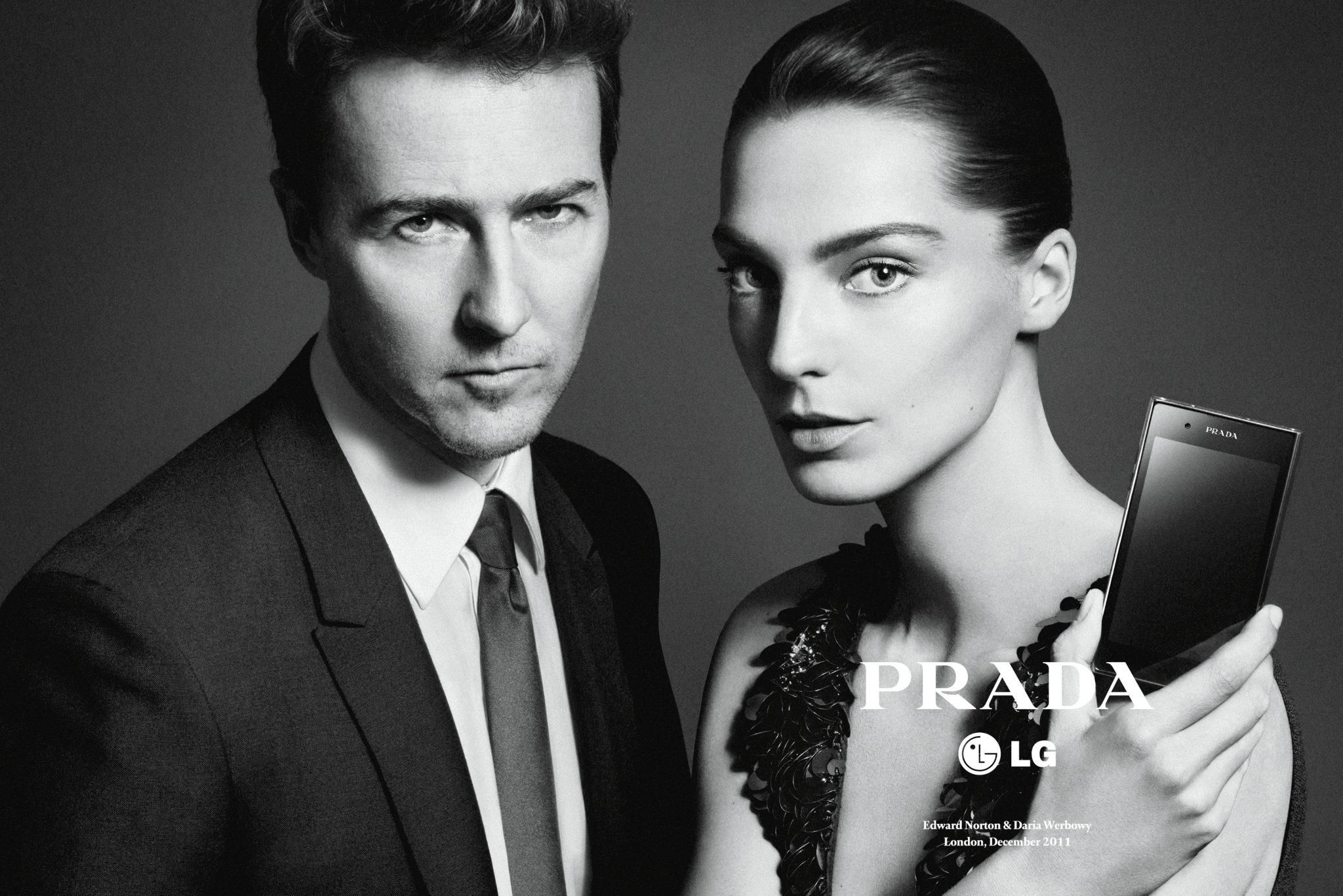
Founded by Mario Prada in 1913 and is now lead by Mario's granddaughter - Miuccia, Prada has been one of the most world renowned couture brands in the fashion industry. In 2007, the Italian label started working with LG in creating a PRADA line of mobile phones.  First out of the production line was the KE850. It sports a 3.0-inch capacitive touchscreen and a 2MP camera.


A year later, LG announced the KF900 PRADA phone. This phone features the same 3.0-inch capacitive touch screen as the KE850, but sports a much improved 5MP camera and a slide out qwerty keyboard.


And just last year, the Korean-Italian duo has once again released a new phone. And this time, it’s a smartphone. The LG P940 otherwise known as the LG PRADA 3.0 phone runs on Android 2.3 Gingerbread and sports a 1Ghz dual core TI OMAP processor, 1GB of RAM, an 8MP camera and a highly customized UI.


Ferrari with Motorola and Acer.

Ferrari is a sports car manufacturer based in Maranello, Italy and is well known in producing luxury supercars. However, a lot of people don’t know that Ferrari also produces its own clothing and accessories line, which includes men’s shirts, jackets, sweat shirts, trousers and shorts for men, women and children.


Back in 2007, Ferrari teamed up with Motorola in producing the MotoRAZR MAXX V6. It’s actually just a Ferrari branded Moto RAZR that sports the same features like a 2MP camera, 50MB of storage and other functionalities found on most feature phones at that time.

In 2010, Ferrari has once again tried its luck with the Acer Ferrari smartphone. The Acer Ferrari phone was based on Acer’s Liquid E Android smartphone. It runs on Android 2.1 Froyo with 768Mhz processor, 512MB of RAM and a 5MP camera.

Alcatel and Mandarina Duck.

French mobile phone manufacturer Alcatel also tried to release a designer phone way back in 2007 with the Alcatel Mandarina Duck phone. With the help of Italian fashion brand, Mandarina Duck, Alcatel created a flip basic feature phone that came in cherry red, lilac or green colors.


Christian Dior.

Christian Dior is one of the world’s top fashion houses and is located in France. In 2009, they released their first set of phones in the market. Unlike other couture brands mentioned above, Christian Dior chose to create and brand their own set of mobile phones. Their first phones – Zenaide, Zelie and Nacre were crafted from exquisite materials such as diamonds and mother-of-pearl and is priced at $7900, $13400 and $8700 respectively during that time.


Last year, Dior ventured into smartphone territory with the Dior Touch. Although not yet officially released in the public, there are already a lot of speculations about the phone. For starters, it’s rumoured to have a 3.2” display and a 5MP camera. And of course, being a Christian Dior phone, it will most definitely be created from the finest materials such as diamonds, steel, gold, mother-of-pearl and sapphire crystal.


Tag Heuer.

Tag Heuer is a Swiss luxury watchmaker owned by LVMH (the company that operates Louis Vuitton). Just like Christian Dior, Tag Heuer decided to produce their own line of phone. The first phone off their production line was the Tag Heuer Meridiist (yes, I know it’s a mouthful). The Meridiist is actually a feature phone adorned in metal and leather, although it does tell you the time at a glance with an OLED display on top.


Now, if you think that Tag Heuer is a little left out in terms of having a smartphone in their line-up, then you’d be happy to know that they are now offering an android handset. The Tag Heuer Link phone runs on a skinned version of Android 2.2 Froyo, a Gorilla Glass protection on top of a 3.5” LCD TFT display, a 5MP camera, Bluetooth, wifi, AGPS and Micro SD expansion slot. Just like the Meridiist, the Link phone will be formed from the finest materials such as steel, 18 karat rose gold, titanium, leather and even alligator skin.


The devices mentioned above are indeed stylish and fashionable. But being the product of a partnership between a luxury fashion house and an electronics manufacturer has its consequences. For starters, some of the products mentioned above are already expensive on their own. So, branding it with the name of a fashion house raises the prices even higher. And to make things worse, some of the phones in the list are just feature phones and yet they have premium prices.

To sum it all up, designer phones are just like couture. If one has to look at these devices in terms of their usefulness and functionality, they are no different from regular phones. Buying and owning one is just a matter of preference and having the money to purchase one. If you’re the type of user who prefers having a phone that gives the most bang for the buck, then these phones are not for you. But if you’re the brand conscious consumer, then the thought of just owning one of these devices will surely make your spine tingle for joy and excitement. 

About TFL

The Filipino Lifestyle is a team of young and hip professionals with a passion for sharing their insights on topics various about technology, gadgets, travel, food, beauty and fashion with the rest of the online world. The team’s unique mix of hobbies and interest allows The Filipino Lifestyle Blog to be a rich source of information for its readers that is both fun and interesting to read.

Like us on Facebook

2012-2015 © The Filipino Lifestyle
Planer theme
Powered by Jasper Roberts Consulting - Widget